L-Carnitine Injection: FDA-Approved Use vs Off-Label Fat Loss
L-carnitine injection is FDA-approved as Carnitor for diagnosed deficiency. What that covers, and what the separate off-label fat-loss use is and is not.

The short version
Levocarnitine injection is FDA-approved, as Carnitor, for one thing: treating diagnosed carnitine deficiency, including in dialysis patients. That approval is trial-backed. The "fat-burning" shots sold by weight-loss and aesthetic clinics use the same prescription drug off-label, in people without deficiency. The human weight-loss evidence comes from oral capsules, not injections.
- Levocarnitine is FDA-approved by injection (Carnitor) for diagnosed carnitine deficiency, not for fat loss.
- The "fat-burning" shot sold at weight-loss clinics is the same drug, used off-label in people without deficiency.
- The best human weight-loss evidence is a meta-analysis of oral L-carnitine trials: a modest effect, by mouth, not injection.
- L-carnitine is an amino-acid derivative, not a peptide, despite showing up on the same clinic menus.
L-Carnitine (injection) at a glance
- What it is
- Amino-acid derivative (levocarnitine) - not a peptide
- Main use
- FDA-approved, as CARNITOR, for treating carnitine deficiency (a defined metabolic/biochemical condition): the injection also for the prevention and treatment of carnitine deficiency in dialysis patients, and the tablets and oral solution (including sugar-free CARNITOR SF) for primary and inherited-metabolic-disorder carnitine deficiency. This page covers the injection. Sold off-label, and through compounding and aesthetic-medicine clinics, as a "fat-burning" or metabolism-support injection for people without diagnosed deficiency.
- Generic name
- levocarnitine
- Brand names
- Carnitor and Carnitor SF (Leadiant Biosciences) Label
- Molecular formula
- C7H15NO3 (161.20 g/mol) Structure
- Evidence
- Strong human evidence
- US status
- FDA-approved · prescription only
- Dose
- Set by the FDA label Dosing page
L-carnitine injection is FDA-approved for one specific thing. CARNITOR (levocarnitine) injection treats diagnosed carnitine deficiency, including in patients on dialysis. Most people searching for it want to know about something else: the “fat-burning” shot sold off-label at weight-loss and wellness clinics. This page covers both, separately.
Dosing: the approved label dose for deficiency, and the separate off-label fat-loss protocol.
Consistent findings across large trials or meta-analyses. FDA's approval of injectable levocarnitine rests on trials in its approved population: patients with an inborn error of metabolism or dialysis-related carnitine deficiency, including a dose-ranging hemodialysis study. That is strong evidence for that use. It says nothing about fat loss in someone without deficiency, which has separate, much weaker evidence.
What is L-carnitine, and why is it injected?
Carnitine is a compound the body makes from the amino acids lysine and methionine, and also gets from food, mainly red meat and dairy. Levocarnitine is its active form. It is not a peptide, even though clinics sell it next to injectable peptides.
In carnitine deficiency, caused by an inborn metabolic error or by dialysis, the body runs short. Replacing carnitine by injection is the FDA-approved fix.
L-Carnitine (injection) structure
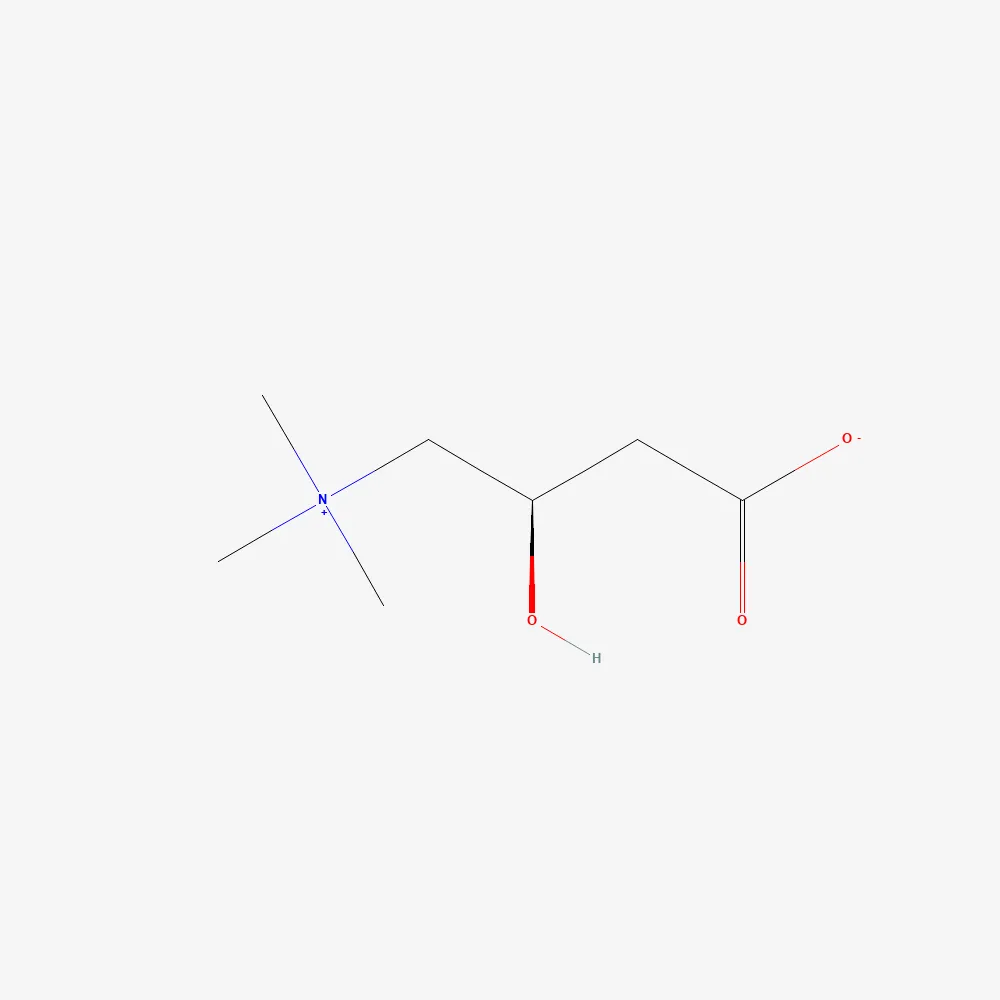
- Molecular formula
- C7H15NO3
- Molecular weight
- 161.20 g/mol
- PubChem CID
- 10917
Not a peptide. PubChem draws the zwitterion (the form it takes in the body and in solution).
Identity checked against KEGG DRUG (levocarnitine).
How L-carnitine works
Levocarnitine carries long-chain fatty acids across the inner membrane of mitochondria, where they are burned for energy. In deficiency that transport fails, and replacing carnitine restores it.
The fat-loss pitch uses the same mechanism: more carnitine, more fat transported, more fat burned. But in someone whose carnitine is already normal, that is a much less proven claim, without the evidence behind the approved use.
L-carnitine benefits: what the approved use is, and what fat loss evidence exists
The approved use. FDA cleared CARNITOR on trials in patients with diagnosed deficiency, including a dose-ranging study in hemodialysis patients. That shows replacing a documented deficiency works, not that it helps a healthy person lose fat.
Fat loss. The strongest human evidence I verified is a meta-analysis of 37 randomised controlled trials of oral L-carnitine. It “significantly decreased body weight” and fat mass in adults, with a non-linear dose-response for body weight Talenezhad 2020 - Talenezhad N, Mohammadi M, Ramezani-Jolfaie N et al. Effects of l-carnitine supplementation on weight loss and body composition: A systematic review and meta-analysis of 37 randomized controlled clinical trials with dose-response analysis. Clin Nutr ESPEN. 2020;37:9-23., in the references below. Two limits apply:
- In the high-quality trials alone, only the body-weight effect held.
- Waist circumference and body fat percentage showed no significant effect, even in the main analysis.
That is genuine trial evidence for a modest effect. But it is oral dosing in general adult populations, not the injection sold at weight-loss clinics. I found no comparable trial of the off-label injection.
L-carnitine injection dosage
The approved dose for deficiency is given by IV and based on body weight. That is a different figure entirely from what clinics use off-label for fat loss. Both are on the dosing page, kept separate.
L-carnitine injection side effects
Those warnings come from the approved use’s trials and postmarketing data. The off-label fat-loss use has no comparable FDA-reviewed safety record. It is usually given to people without deficiency, often at lower doses, into muscle or under the skin rather than by the approved IV route. Full detail on the dosing page.
Is L-carnitine injection legal?
US legal status - FDA-approved · prescription only
CARNITOR (levocarnitine) injection is FDA-approved, prescription-only, for treating diagnosed carnitine deficiency. A prescriber may legally use the same substance off-label for fat loss, alone or compounded into a LIPO-C blend, but no FDA approval covers that claim.
Regulatory changes for this and other compounds, as they happen: US peptide regulation tracker.
Related reading
How L-Carnitine (injection) compares
Mitochondrial and metabolic. Doses for unapproved compounds are common practice, not trial-established. All longevity and mitochondria peptides →
| Compound | Main use | Evidence | Usual dose | US status |
|---|---|---|---|---|
| MOTS-c | Sold for metabolic health, fat loss and longevity. Studied in humans as a biomarker of exercise response. | Animal / lab only | 2.5-10 mg, 2 to 3 times a week is most common, with some protocols ramping toward daily dosing at higher amounts | Research use only |
| SS-31 | FDA-approved (accelerated approval, 2025) as Forzinity to improve muscle strength in Barth syndrome, a rare genetic mitochondrial disease. Sold online as a longevity and cellular-energy peptide. | Moderate human evidence | FDA label | FDA-approved · prescription only |
| Humanin | Sold online for anti-aging and neuroprotection claims. Studied almost entirely in cell cultures and rodents; no completed human efficacy trial was located for this page. | Animal / lab only | 0.5-5 mg, commonly once daily; some protocols use 2 to 3 times a week instead | Research use only |
| NAD+ (injection) | Sold by IV-therapy clinics and compounding pharmacies, by subcutaneous injection or IV infusion, for marketed energy, anti-aging, cognition and addiction-recovery claims. | Limited human data | 50-500 mg, 1-3 times a week by subcutaneous injection; many protocols start low, once weekly, and increase only if tolerated | Unapproved drug |
| SLU-PP-332 | A laboratory research chemical studied in mice as an "exercise mimetic" - it triggers some of the same muscle and metabolic gene programs endurance exercise does. Sold to consumers as a research chemical for that same effect, with no human study behind that use. | Animal / lab only | No consistent protocol | Unapproved drug |
| AICAR | Studied as an AMPK-activating "exercise mimetic" that boosted running endurance in sedentary mice; separately studied in humans, under the name acadesine, as an intravenous cardioprotective drug during heart bypass surgery - a use large trials found did not work. Now sold to consumers as an unapproved research-chemical endurance and metabolic product. | Limited human data | No consistent protocol | Unapproved drug |
| L-Carnitine (injection) | FDA-approved, as CARNITOR, for treating carnitine deficiency (a defined metabolic/biochemical condition): the injection also for the prevention and treatment of carnitine deficiency in dialysis patients, and the tablets and oral solution (including sugar-free CARNITOR SF) for primary and inherited-metabolic-disorder carnitine deficiency. This page covers the injection. Sold off-label, and through compounding and aesthetic-medicine clinics, as a "fat-burning" or metabolism-support injection for people without diagnosed deficiency. | Strong human evidence | FDA label | FDA-approved · prescription only |
Where to get L-Carnitine (injection) legally
L-Carnitine (injection) is an FDA-approved prescription medicine, so the legal route is a licensed prescriber, in person or by telehealth, and a licensed pharmacy.
How telehealth prescribing works, what it costs and what to check: telehealth peptide prescribing.
Common questions
What is L-carnitine injection?
Injectable levocarnitine, the active form of carnitine. FDA approved it as CARNITOR to treat diagnosed carnitine deficiency, including in dialysis patients. Weight-loss and aesthetic clinics also sell it off-label, alone or in a "LIPO-C" blend with methionine, inositol and choline, as a fat-burning shot for people without deficiency.
What is the usual L-carnitine injection dose?
It depends on the use. For the approved deficiency treatment, the label sets a weight-based intravenous dose. For off-label fat loss, clinic sources describe 200-2,000 mg per injection, 1-3 times a week, which is common practice, not FDA-reviewed. The dosing page covers both separately.
What are the side effects of L-carnitine injection?
FDA's label for the approved use warns of serious allergic reactions (anaphylaxis, laryngeal edema, bronchospasm), some within minutes of an IV dose, and postmarketing reports of seizures. Those warnings come from the approved use. The off-label fat-loss use has no comparable FDA-reviewed safety record.
Does L-carnitine injection actually help you lose fat?
Not established for the injection. The clearest human evidence is a meta-analysis of 37 randomised trials of oral L-carnitine, which found modest drops in body weight and fat mass; in the high-quality trials only the body-weight effect held. That is real trial evidence, but for capsules. I found no comparable trial of the off-label injection.
What does L-carnitine injection do?
Levocarnitine carries long-chain fatty acids into mitochondria so they can be burned for energy. In some inherited metabolic disorders it also helps clear toxic compounds. The approved injection restores carnitine in people with diagnosed deficiency. Whether extra carnitine speeds fat loss when levels are already normal is a much less established claim.
Does L-carnitine burn belly fat?
Not on the evidence available. The meta-analysis of 37 randomised trials of oral L-carnitine found no significant effect on waist circumference or body fat percentage. The modest effect was on body weight and fat mass, and only body weight held in the high-quality trials. I found no trial of the injection for belly fat.
Is L-carnitine like Ozempic?
No. Ozempic is semaglutide, an FDA-approved GLP-1 receptor agonist. L-carnitine is an amino-acid derivative, not a peptide, and its only approved use is treating carnitine deficiency. Its weight-loss evidence is a modest effect from oral supplements, and I found no trial comparing the two. See the [semaglutide page](/semaglutide/) for what that drug's label covers.
Do I inject L-carnitine every day?
Not in the off-label fat-loss protocols clinics describe. Those give 200-2,000 mg into muscle or under the skin 1-3 times a week, which is common practice, not FDA-reviewed. The approved deficiency treatment is a different, weight-based IV regimen set by a prescriber. See the [dosing page](/l-carnitine-dosage/) for both.
How much weight can I lose on L-carnitine?
I found no trial that answers that for the injection. The best human evidence, a meta-analysis of 37 randomised trials of oral L-carnitine, found average drops of about 1.21 kg in body weight and 2.08 kg in fat mass. Only the body-weight result held in the high-quality trials.
What is the brand name of levocarnitine?
Levocarnitine is sold under the brand names Carnitor and Carnitor SF, made by Leadiant Biosciences. Carnitor is approved for injection: secondary carnitine deficiency caused by an inherited metabolic disorder, and preventing and treating carnitine deficiency in people with end-stage kidney disease on dialysis; tablets and oral solution: primary systemic carnitine deficiency and secondary carnitine deficiency caused by an inherited metabolic disorder. Carnitor SF is approved for primary systemic carnitine deficiency, and secondary carnitine deficiency caused by an inherited metabolic disorder.
What is the generic name for Carnitor?
The generic name for Carnitor is levocarnitine. Carnitor is Leadiant Biosciences's brand, approved for injection: secondary carnitine deficiency caused by an inherited metabolic disorder, and preventing and treating carnitine deficiency in people with end-stage kidney disease on dialysis; tablets and oral solution: primary systemic carnitine deficiency and secondary carnitine deficiency caused by an inherited metabolic disorder.
What is the generic name for Carnitor SF?
The generic name for Carnitor SF is levocarnitine. Carnitor SF is Leadiant Biosciences's brand, approved for primary systemic carnitine deficiency, and secondary carnitine deficiency caused by an inherited metabolic disorder.
Is Carnitor the same as levocarnitine?
Yes. Carnitor is a brand of levocarnitine, made by Leadiant Biosciences: the active ingredient is levocarnitine. It comes as a intravenous injection (1 g/5 mL vial), 330 mg tablet, or oral solution (1 g/10 mL), dosed at injection: 50 mg/kg for metabolic disorders, or 10 to 20 mg/kg after each dialysis session; tablets: 990 mg two or three times a day in adults. Compounded or research-vial levocarnitine is not Carnitor and has not been through its FDA review.
Is Carnitor SF the same as levocarnitine?
Yes. Carnitor SF is a brand of levocarnitine, made by Leadiant Biosciences: the active ingredient is levocarnitine. It comes as a sugar-free oral solution (1 g/10 mL), dosed at adults: 1 to 3 g a day, starting at 1 g a day; children: 50 to 100 mg/kg a day. Compounded or research-vial levocarnitine is not Carnitor SF and has not been through its FDA review.
Is Carnitor the same as Carnitor SF?
Carnitor and Carnitor SF contain the same active ingredient, levocarnitine, and both are made by Leadiant Biosciences. They are approved for different uses and doses: Carnitor for injection: secondary carnitine deficiency caused by an inherited metabolic disorder, and preventing and treating carnitine deficiency in people with end-stage kidney disease on dialysis; tablets and oral solution: primary systemic carnitine deficiency and secondary carnitine deficiency caused by an inherited metabolic disorder (injection: 50 mg/kg for metabolic disorders, or 10 to 20 mg/kg after each dialysis session; tablets: 990 mg two or three times a day in adults); Carnitor SF for primary systemic carnitine deficiency, and secondary carnitine deficiency caused by an inherited metabolic disorder (adults: 1 to 3 g a day, starting at 1 g a day; children: 50 to 100 mg/kg a day).
References (3 sources)
Bibliographic detail is fetched from PubMed, not written by me - so a citation here cannot drift from the paper it names. Study design comes from PubMed's own tags rather than my judgement.
- 1.Talenezhad N, Mohammadi M, Ramezani-Jolfaie N et al. Effects of l-carnitine supplementation on weight loss and body composition: A systematic review and meta-analysis of 37 randomized controlled clinical trials with dose-response analysis. Clin Nutr ESPEN. 2020;37:9-23.Meta-analysisPMID 32359762
- 2.DailyMed - CARNITOR (levocarnitine) injection, solution, full prescribing information.- DailyMed, US National Library of Medicinelabel
- 3.CARNITOR SF (levocarnitine) sugar-free oral solution - prescribing information- DailyMed, National Library of Medicinelabel