AICAR (Acadesine): Benefits, Dosage and Side Effects
AICAR (acadesine): not a peptide, an AMPK-activating nucleoside that boosted endurance in mice but failed its own large human heart-surgery trial.

The short version
AICAR is not a peptide but a small nucleoside molecule that switches on AMPK, a cell's energy sensor. A famous 2008 mouse study found it raised running endurance by 44% without exercise. Under the name acadesine, it was given by drip to over 3,000 heart-surgery patients in a large human trial and did not reduce death, stroke or heart damage. It is banned in sport and not FDA-approved for anything.
- AICAR is a nucleoside analogue, not a peptide, though it is sold alongside injectable research peptides.
- Its endurance reputation comes from one 2008 mouse study, never repeated as a human endurance trial.
- A large human trial of over 3,000 patients, under the name acadesine, found it did not work for the heart outcome it tested.
- Banned at all times in sport under WADA's current list, section S4.
AICAR at a glance
- What it is
- Purine nucleoside analogue (AMPK activator) - not a peptide, despite being sold and marketed alongside research peptides
- Main use
- Studied as an AMPK-activating "exercise mimetic" that boosted running endurance in sedentary mice; separately studied in humans, under the name acadesine, as an intravenous cardioprotective drug during heart bypass surgery - a use large trials found did not work. Now sold to consumers as an unapproved research-chemical endurance and metabolic product.
- Also called
- Acadesine, AICA riboside, 5-Aminoimidazole-4-carboxamide ribonucleoside
- Molecular formula
- C9H14N4O5 (258.23 g/mol) Structure
- Evidence
- Limited human data
- US status
- Unapproved drug
- Half-life
- Not established in humans
- Dose
- No consistent protocol in circulation Dosing page
Dosing: what real sources say - and don’t agree on.
AICAR is not a peptide. Every injectable peptide on this site, from BPC-157 to CJC-1295 and ipamorelin, is a chain of amino acids. AICAR (also called acadesine or AICA riboside) is a small nucleoside molecule, chemically related to adenosine. It is routinely sold alongside research peptides anyway.
Small or uncontrolled human studies. Too little to settle the question either way. A large, multicentre, randomised, placebo-controlled trial in over 3,000 heart-surgery patients tested this molecule (as acadesine) and found it did not reduce death, stroke or heart damage. That is real human trial evidence, and it does not favour the drug. The endurance and fat-loss claim it is marketed for comes from one 2008 mouse study, never repeated as a controlled human endurance trial at any dose.
What is AICAR?
AICAR is short for 5-aminoimidazole-4-carboxamide ribonucleoside. Cells take it up and convert it to ZMP, a molecule that mimics AMP. ZMP switches on AMP-activated protein kinase (AMPK), a central sensor of how much energy a cell has.
Under the name acadesine, the same molecule has decades of human research for a completely different purpose: protecting heart tissue during coronary artery bypass graft (CABG) surgery.
AICAR structure
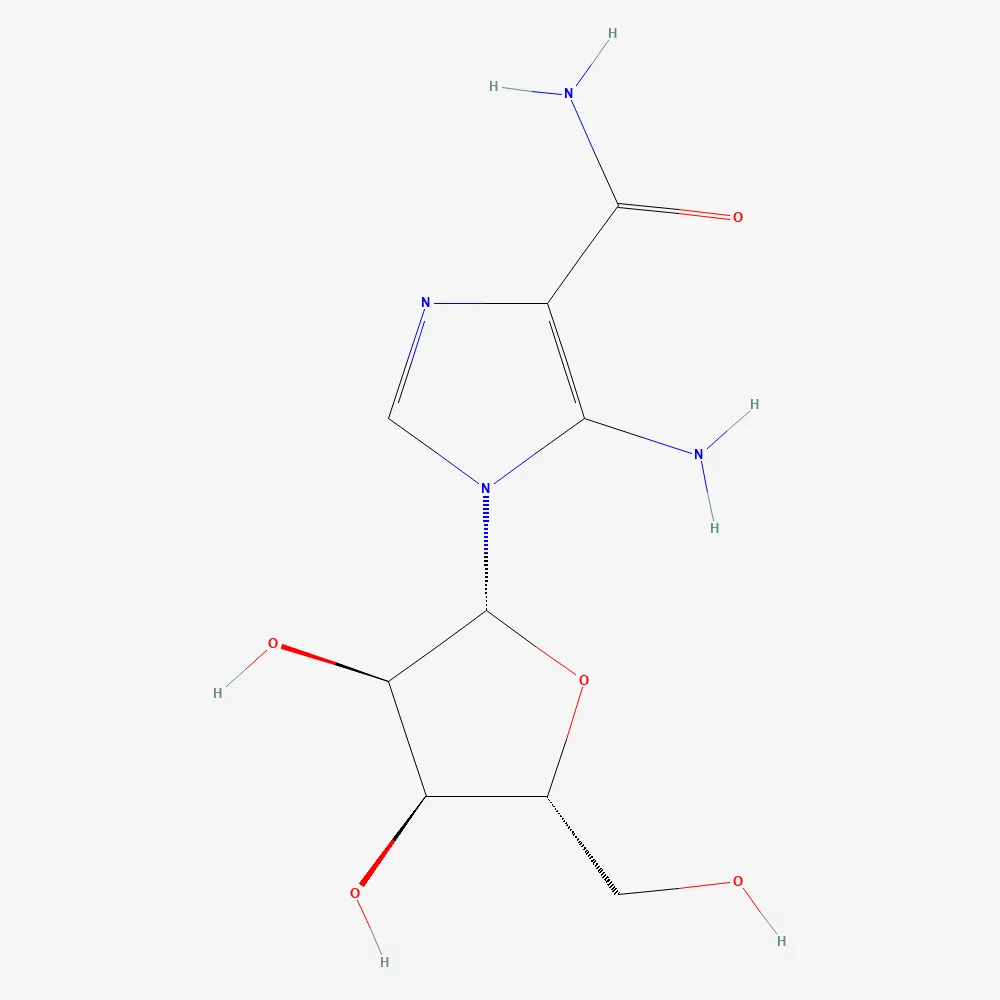
- Molecular formula
- C9H14N4O5
- Molecular weight
- 258.23 g/mol
- PubChem CID
- 17513
A nucleoside (an imidazole ring on a ribose sugar), not a peptide. This is the riboside itself; inside cells it is phosphorylated to ZMP, which is the form that activates AMPK.
Identity checked against ChEMBL (EMBL-EBI).
AICAR benefits: what the research shows
AICAR’s endurance reputation traces to one widely cited study Narkar 2008 - Narkar VA, Downes M, Yu RT et al. AMPK and PPARdelta agonists are exercise mimetics. Cell. 2008;134(3):405-15., in the references below. In sedentary mice, 4 weeks of AICAR alone, with no exercise, switched on metabolic genes and increased treadmill running endurance by 44%. That is a real, peer-reviewed finding, but in mice, at a dose far higher per kilogram than anything given to people in the heart trials below.
A large human trial Newman 2012 - Newman MF, Ferguson TB, White JA et al. Effect of adenosine-regulating agent acadesine on morbidity and mortality associated with coronary artery bypass grafting: the RED-CABG randomized controlled trial. JAMA. 2012;308(2):157-64., in the references below gave the same molecule, as acadesine, by drip to over 3,000 patients having bypass surgery. It tested whether acadesine would reduce death from any cause, nonfatal stroke or severe weakening of the heart’s main pumping chamber (left ventricular dysfunction). It did not. The primary outcome occurred in 5.0% of the placebo group and 5.1% of the acadesine group. The trial was stopped early after a planned analysis found a very low chance of a meaningful benefit.
AICAR dosage
No dose is FDA-approved, and no human trial has set one for the endurance or metabolic use it is sold for. Research-market sources differ by roughly tenfold, and each says it has no validated protocol. Full sourcing: AICAR dosage.
AICAR side effects
There is no comparable human safety data for the route, dose or people that research-chemical vendors describe. No regulator checks that a vial sold outside a regulated or trial supply chain matches its label for contents, purity or strength.
Get emergency care for shortness of breath, chest pain, rapid or unexplained swelling, or signs of a severe allergic reaction.
Is AICAR legal?
US legal status - Unapproved drug
Not FDA-approved for any use. Studied for decades in humans as acadesine for heart surgery, but never approved for that or anything else. Not a dietary supplement. Banned at all times in sport under WADA section S4.
- Not FDA-approved for any use, and not marketed as a drug anywhere for the heart use it was studied for.
- Not a dietary supplement. It is sold outside the FDA-regulated supply chain, so no regulator checks a vial’s identity, purity or dose.
- WADA’s current Prohibited List names AICAR under S4 (Hormone and Metabolic Modulators), banned at all times in sport. I confirmed this by searching “AICAR” on wada-ama.org on 28 September 2026.
Related reading
- MOTS-c - a genuine mitochondrial-pathway peptide, for comparison
- SLU-PP-332 - another non-peptide exercise-mimetic research compound
- L-Carnitine - another non-peptide metabolic compound sold in the same category
- Research peptides and the law
- Are peptides safe?
Regulatory changes for this compound and others, as they happen: US peptide regulation tracker.
How AICAR compares
Mitochondrial and metabolic. Doses for unapproved compounds are common practice, not trial-established. All longevity and mitochondria peptides →
| Compound | Main use | Evidence | Usual dose | US status |
|---|---|---|---|---|
| MOTS-c | Sold for metabolic health, fat loss and longevity. Studied in humans as a biomarker of exercise response. | Animal / lab only | 2.5-10 mg, 2 to 3 times a week is most common, with some protocols ramping toward daily dosing at higher amounts | Research use only |
| SS-31 | FDA-approved (accelerated approval, 2025) as Forzinity to improve muscle strength in Barth syndrome, a rare genetic mitochondrial disease. Sold online as a longevity and cellular-energy peptide. | Moderate human evidence | FDA label | FDA-approved · prescription only |
| Humanin | Sold online for anti-aging and neuroprotection claims. Studied almost entirely in cell cultures and rodents; no completed human efficacy trial was located for this page. | Animal / lab only | 0.5-5 mg, commonly once daily; some protocols use 2 to 3 times a week instead | Research use only |
| NAD+ (injection) | Sold by IV-therapy clinics and compounding pharmacies, by subcutaneous injection or IV infusion, for marketed energy, anti-aging, cognition and addiction-recovery claims. | Limited human data | 50-500 mg, 1-3 times a week by subcutaneous injection; many protocols start low, once weekly, and increase only if tolerated | Unapproved drug |
| SLU-PP-332 | A laboratory research chemical studied in mice as an "exercise mimetic" - it triggers some of the same muscle and metabolic gene programs endurance exercise does. Sold to consumers as a research chemical for that same effect, with no human study behind that use. | Animal / lab only | No consistent protocol | Unapproved drug |
| AICAR | Studied as an AMPK-activating "exercise mimetic" that boosted running endurance in sedentary mice; separately studied in humans, under the name acadesine, as an intravenous cardioprotective drug during heart bypass surgery - a use large trials found did not work. Now sold to consumers as an unapproved research-chemical endurance and metabolic product. | Limited human data | No consistent protocol | Unapproved drug |
| L-Carnitine (injection) | FDA-approved, as CARNITOR, for treating carnitine deficiency (a defined metabolic/biochemical condition): the injection also for the prevention and treatment of carnitine deficiency in dialysis patients, and the tablets and oral solution (including sugar-free CARNITOR SF) for primary and inherited-metabolic-disorder carnitine deficiency. This page covers the injection. Sold off-label, and through compounding and aesthetic-medicine clinics, as a "fat-burning" or metabolism-support injection for people without diagnosed deficiency. | Strong human evidence | FDA label | FDA-approved · prescription only |
Where to buy AICAR for research
Each vendor is checked against my vendor checklist.
1.Next Level PharmFeatured
50 mg vial
- No FDA warning letter found
- Names its testing lab
- Batch COAs published
- Takes card payment
Common questions
Is AICAR a peptide?
No. AICAR (5-aminoimidazole-4-carboxamide ribonucleoside, also called acadesine or AICA riboside) is a purine nucleoside analogue, chemically related to adenosine, not a chain of amino acids. Vendors group it with injectable research peptides, but it is a different class of molecule.
What is the usual AICAR dose?
No dose is FDA-approved or set by any human trial for the endurance or metabolic use it is marketed for. The research-market pages I checked differ by roughly tenfold, and each says it has no validated human protocol. See the dosing page for sources.
What are the side effects of AICAR?
In the largest human trial, over 3,000 heart-surgery patients given it by drip as acadesine, it was reported as generally tolerated. But that trial measured heart outcomes, not endurance or metabolism. There is no comparable human safety data for the doses, route or people vendors describe.
Is AICAR banned in sport?
Yes. The current WADA Prohibited List bans it at all times under S4 (Hormone and Metabolic Modulators), as an AMPK activator. I confirmed this by searching "AICAR" on wada-ama.org on 28 September 2026.
Does AICAR actually improve endurance in humans?
No human trial I can verify shows that. The endurance claim comes from one 2008 study in sedentary mice, at doses far higher per kilogram than anything given to people in the heart-surgery trials. No published, controlled human trial has tested AICAR for endurance, fat loss or athletic performance at any dose.
References (3 sources)
Bibliographic detail is fetched from PubMed, not written by me - so a citation here cannot drift from the paper it names. Study design comes from PubMed's own tags rather than my judgement.
- 1.Narkar VA, Downes M, Yu RT et al. AMPK and PPARdelta agonists are exercise mimetics. Cell. 2008;134(3):405-15.StudyPMID 18674809full text
- 2.Newman MF, Ferguson TB, White JA et al. Effect of adenosine-regulating agent acadesine on morbidity and mortality associated with coronary artery bypass grafting: the RED-CABG randomized controlled trial. JAMA. 2012;308(2):157-64.Randomised trialPMID 22782417
- 3.WADA Prohibited List search tool - searching "AICAR" returns one result, classified under S4 (Hormone and Metabolic Modulators), prohibited at all times. Verified by keyword search on 2026-09-28.- World Anti-Doping Agencyregulatory