KPV Peptide: Capsules, Dosage, Side Effects and Legal Status
KPV peptide capsules vs injections: what oral KPV did in mice, the common-practice dose, side effects, legal status, and what FDA found in its review.

The short version
KPV is a three-amino-acid fragment of alpha-MSH, sold online for gut inflammation, skin conditions and wound healing. Its record is in cells and animals, including a mouse study where it reduced gut inflammation in two colitis models. FDA's July 2026 review found no human study of KPV by any route, and FDA staff proposed not adding it to the list pharmacies use to compound legally.
- KPV has a real cell and animal record on inflammation, including two mouse colitis models.
- FDA's own review found no human studies of KPV yet, by any route.
- Not on the 503A Bulks List, so no pharmacy can lawfully compound it yet.
- FDA flagged unresolved impurity, aggregation and naming problems for KPV free base and KPV acetate.
- Oral KPV reduced gut inflammation in mice. I found no test of KPV capsules in people.
KPV at a glance
- What it is
- Synthetic tripeptide (C-terminal fragment of alpha-MSH)
- Main use
- Sold for gut inflammation, skin conditions and wound healing. Nominated to FDA as a 0.1% topical cream or gel for wound healing and inflammatory conditions. FDA found no study in which KPV was given to a human for anything.
- Also called
- Lys-Pro-Val, Lysine-proline-valine, KPV acetate, Alpha-MSH (11-13)
- Molecular formula
- C16H30N4O4 (342.43 g/mol) Structure
- Evidence
- Animal / lab only
- US status
- Research use only
- Half-life
- Not established in humans
- How it is taken
- Subcutaneous injection
- Common protocol
- 200-500 mcg, once or twice daily, subcutaneous injection, rotating sites, for 4-8 weeks (common practice, not trial-established) Dosage chart
KPV is sold online as injections, capsules, skin products and nasal sprays, for gut inflammation, skin conditions and wound healing. The interest has a real basis in the lab: more than a hundred published papers, including a mouse study where oral KPV reduced gut inflammation in two colitis models. What it doesn’t have yet is a human study. FDA reviewed it for pharmacy compounding in July 2026, and its briefing says neither the nominator nor FDA found one, by any route.
This page sets out what the cell and animal work suggests, what FDA found, and what that means if you are weighing it. I’m not telling you KPV works or doesn’t.
Dosing: no human study exists, so here are the animal studies.
US legal status - Research use only
Not an FDA-approved drug. KPV and its acetate salt have no USP or NF monograph, are not part of an approved drug and are not on the 503A Bulks List, so KPV is not currently eligible for lawful pharmacy compounding. FDA staff proposed not adding it.
What is KPV?
KPV is named for its amino-acid sequence: lysine-proline-valine, also written Lys-Pro-Val. It is a synthetic tripeptide, the three amino acids at the C-terminal end of alpha-melanocyte-stimulating hormone (alpha-MSH). It is sold under names including KPV acetate and “alpha-MSH (11-13)”.
FDA’s July 2026 briefing describes it the same way, and adds one negative finding. Unlike its parent hormone, KPV did not displace alpha-MSH from melanocortin receptors in the lab studies FDA reviewed. KPV is often described in terms of alpha-MSH’s receptor biology, so this matters: any effect would have to come another way, which fits the transporter idea below.
KPV structure
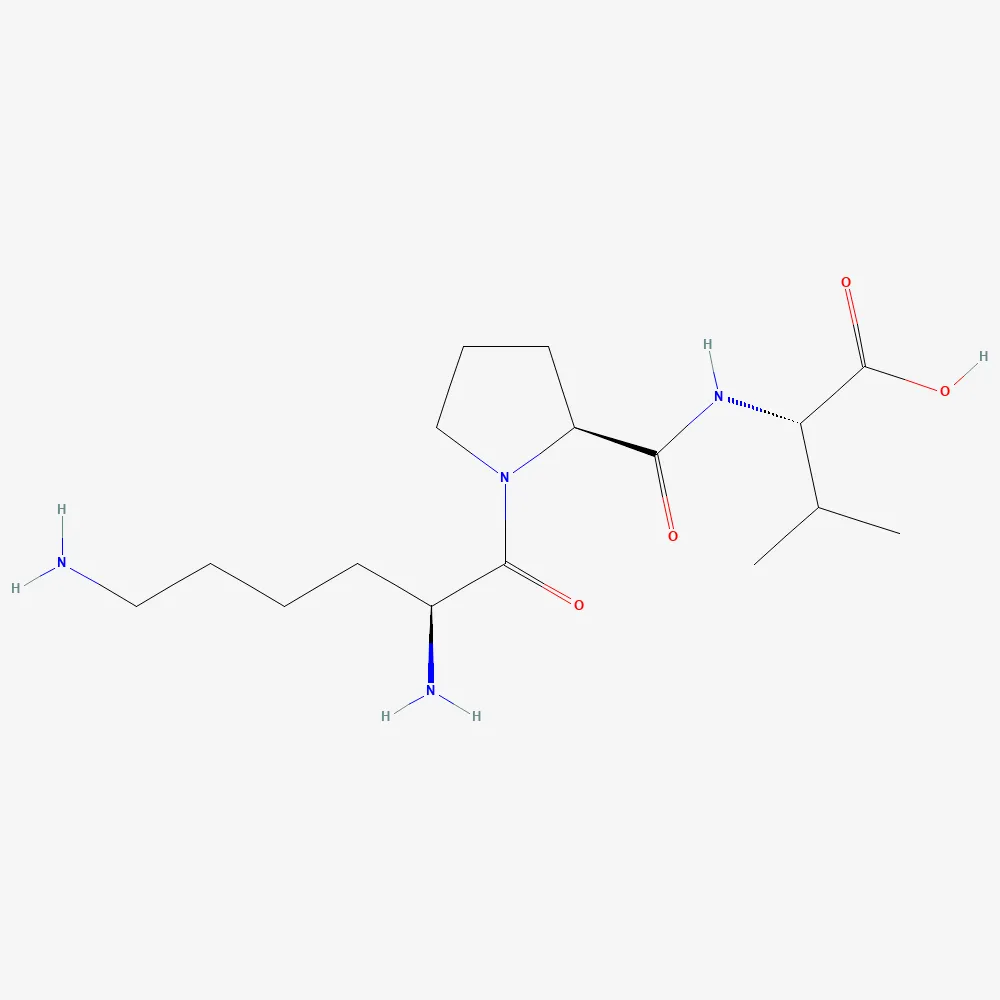
- Molecular formula
- C16H30N4O4
- Molecular weight
- 342.43 g/mol
- Length
- 3 amino acids
- Sequence
- KPV
- Modifications
- Lys-Pro-Val; all L-amino acids; free C-terminal acid.
- PubChem CID
- 125672
The C-terminal tripeptide of alpha-MSH. In alpha-MSH itself the valine is amidated; KPV as studied and sold (and this record) is the free acid.
Identity checked against UniProt.
How KPV works
Researchers propose that KPV dampens inflammation by blocking NF-kappaB activation and blunting cytokines such as interleukin-1 beta. The PepT1 transporter may carry it into gut cells, a route that wouldn’t need a melanocortin receptor at all. That is a coherent lab hypothesis.
FDA calls it incomplete: its briefing concludes that the molecular targets behind KPV’s effects remain unknown. It is a hypothesis worth testing, not an explanation confirmed in people.
KPV benefits: what the research shows
Studied in cells or animals. No controlled trials in humans. Cells and animals only. FDA's July 2026 briefing document states that neither the nominator nor FDA identified any clinical study or human exposure data for KPV, by any route. A PubMed search for KPV as a peptide, run 23 September 2026, returned 110 records and zero indexed under a clinical-trial or randomised-controlled-trial publication type.
What’s promising. There are 110 published records on KPV as a peptide, so this is not an untouched compound. In a 2008 mouse colitis study, KPV added to drinking water reduced gut inflammation Dalmasso 2008 - Dalmasso G, Charrier-Hisamuddin L, Nguyen HT et al. PepT1-mediated tripeptide KPV uptake reduces intestinal inflammation. Gastroenterology. 2008;134(1):166-78., in the references below. The proposed mechanism above gives a coherent reason it might work.
What’s missing. None of it has been tested in people. The PubMed result (zero records tagged as clinical trials) is strong but not absolute, since tagging can lag behind a real trial. FDA’s finding is stronger: its reviewers looked for any clinical study or human exposure data and found none, from the nominator or their own search.
That leaves no human safety data, no established human dose and no regulator check that material sold as a research chemical matches its label. KPV has a real lab record and is waiting for its first human study.
Pharmacokinetics
KPV’s half-life in humans is not established, and neither is any other human pharmacokinetic figure. FDA found no human data on absorption, distribution, clearance or half-life. The dosing intervals, time-of-day advice and cycling schedules online come from practice, not from a measured human number.
KPV dosage
The common KPV dose is 200-500 mcg, once or twice daily, subcutaneous injection, rotating sites. From a 10 mg vial mixed with 2 mL of bacteriostatic water, 350 mcg is 7 units (0.07 mL) on a U-100 insulin syringe.
Vendor dosing guides most often describe 200-500 mcg injected under the skin once or twice a day, for 4-8 weeks, then a 2-4 week break. That is common practice, not a dose any trial or regulator has set.
With no human trial, there is no trial dose to give instead. The published dosing data come from mouse studies, including the 2008 colitis study that added KPV to drinking water; the abstracts I read don’t report exact amounts. Full detail: KPV dosage.
KPV capsules: does oral KPV work?
FDA’s July 2026 briefing found websites promoting KPV as injectable, oral, topical and nasal spray products, alone or mixed with BPC-157 and other peptides. One seller also markets capsules combining KPV with BPC-157 as a dietary supplement.
The oral evidence is in mice, and it concerns the gut:
- In the 2008 colitis study above, KPV in drinking water reduced inflammation in two colitis models. Gut cells took it up through PepT1, a transporter for small peptides Dalmasso 2008 - Dalmasso G, Charrier-Hisamuddin L, Nguyen HT et al. PepT1-mediated tripeptide KPV uptake reduces intestinal inflammation. Gastroenterology. 2008;134(1):166-78., in the references below.
- In a mouse model of colitis-linked colon cancer, KPV in drinking water prevented tumour formation. It had no effect in mice bred without PepT1 Viennois 2016 - Viennois E, Ingersoll SA, Ayyadurai S et al. Critical role of PepT1 in promoting colitis-associated cancer and therapeutic benefits of the anti-inflammatory PepT1-mediated tripeptide KPV in a murine model. Cell Mol Gastroenterol Hepatol. 2016;2(3):340-357., in the references below.
- Researchers have packed KPV into nanoparticles built to release it in the colon. Given by mouth, these reduced colitis in mice Xiao 2017 - Xiao B, Xu Z, Viennois E et al. Orally Targeted Delivery of Tripeptide KPV via Hyaluronic Acid-Functionalized Nanoparticles Efficiently Alleviates Ulcerative Colitis. Mol Ther. 2017;25(7):1628-1640., in the references below.
That work tested the colon, so it bears on gut-inflammation claims, not skin or wound claims. What isn’t known is how much of a capsule survives digestion in people, whether any reaches the blood, and whether it does anything. FDA found no human study of KPV by mouth or by any other route.
Which other peptides work by mouth: oral peptides.
KPV side effects
There is no human safety data for KPV by any route, so there is no side-effect list to report. FDA’s July 2026 review is the most complete account of what is known, and it found none.
FDA’s briefing raises three further concerns specific to KPV:
- Immune reactions and aggregation are open questions. FDA notes that peptides with as few as two amino acids can clump together (aggregate), and there isn’t enough data to rule that risk out for KPV.
- Neither form sold is well characterised. FDA judged both the free base and the acetate salt poorly characterised. It cited inconsistent naming, missing impurity, aggregate and microbial testing, and a nomination whose certificate of analysis named one form while its formula matched the other.
- Skin absorption looks limited, and broken skin is untested. In a cadaver-skin study FDA reviewed, KPV applied to intact skin didn’t get through well, which could limit a cream’s effect. Nobody has measured what happens when the skin barrier is broken, which matters because KPV is also marketed for wound healing.
For redness, itching or swelling at the injection site with an injectable KPV product, see injection-site reactions. No study has looked at this for KPV itself, so treat that page as general information.
Full dosing detail, including why this page gives no established human dose: KPV dosage.
Is KPV legal?
KPV is not an FDA-approved drug for any use. It is sold mostly as a research chemical, though at least one seller markets oral KPV capsules as a dietary supplement.
The 503A compounding question
Under section 503A(b)(1)(A)(i) of the Federal Food, Drug, and Cosmetic Act, a pharmacy may compound with a bulk substance only if it has a USP or NF monograph, is part of an FDA-approved drug, or is on FDA’s 503A Bulks List. KPV and KPV acetate meet none of the three conditions, so KPV is not currently eligible for lawful 503A compounding.
FDA’s Pharmacy Compounding Advisory Committee reviewed KPV on 23 July 2026, alongside BPC-157, TB-500 and MOTS-c. FDA staff proposed not adding it to the list. AJMC reported that the committee voted 8-6, with one abstention, to recommend adding BPC-157, KPV and TB-500. The vote is advisory, and as of 3 October 2026 no Federal Register rule had added KPV to the Bulks List.
FDA’s meeting page had posted no vote tally when I last checked, so the vote count rests on that report. See US Peptide Regulation: What Changed and When for the dated account of what is confirmed.
What “removed from Category 2” does not mean
KPV was nominated for the 503A Bulks List and, like several other peptides, the nomination was withdrawn. On FDA’s bulk-substances safety-risk page it now sits in a table of withdrawn nominations, not in the active Category 2 table.
That only describes where the nomination sits in FDA’s internal review. It is not FDA approval, and it is not the same as being on the 503A Bulks List, which is what a pharmacy actually checks before compounding.
What “research use only” means
It is a labelling choice, not a legal category. FDA classifies a product by its intended use, and treats seller websites and marketing claims as evidence of that intent, whatever the label says.
Related guides
- US Peptide Regulation: What Changed and When
- BPC-157: What the Research Shows
- BPC-157 and KPV stack: protocol, evidence and risks
- Best peptides for inflammation, ranked by human evidence
- Peptides for gut health, ranked by human evidence
How KPV compares
Healing and recovery. Doses for unapproved compounds are common practice, not trial-established. All healing and recovery peptides →
| Compound | Main use | Evidence | Usual dose | US status |
|---|---|---|---|---|
| BPC-157 | Studied in rodents for musculoskeletal soft-tissue healing. Sold to humans for injury recovery, a use whose only human data is one uncontrolled retrospective chart review of 17 people with knee pain. | Limited human data | 250-500 mcg, once or twice daily, injected subcutaneously near the injury site when possible | Research use only |
| TB-500 | Marketed for tissue repair and injury recovery. I could not locate a completed, published human randomized trial for any musculoskeletal or tissue-repair indication. | Animal / lab only | 2-2.5 mg, twice weekly during a 4-6 week loading phase, then once weekly (or every two weeks) for maintenance | Research use only |
| KPV | Sold for gut inflammation, skin conditions and wound healing. Nominated to FDA as a 0.1% topical cream or gel for wound healing and inflammatory conditions. FDA found no study in which KPV was given to a human for anything. | Animal / lab only | 200-500 mcg, once or twice daily, subcutaneous injection, rotating sites | Research use only |
| GHK-Cu | Topical cosmetic anti-aging - fine lines, skin density and firmness, elasticity, photodamage, hyperpigmentation - and wound healing. Also marketed in hair-loss cosmetics. | Limited human data | 1-2 mg, once daily, before bed | Cosmetic |
Where to buy KPV for research
Each vendor is checked against my vendor checklist.
1.Next Level PharmFeatured
10 mg vial
- No FDA warning letter found
- Names its testing lab
- Batch COAs published
- Takes card payment
2.BioEdge Research Labs
10 mg vial
- No FDA warning letter found
- Names its testing lab
- Batch COAs published
KPV capsules
Taken by mouth, and a different product from the vial: ask for a COA for the capsule batch.
- BioEdge Research Labs: 500 mcg capsules, 60 count$109.00 as of 3 October 2026 View →
Common questions
What are the benefits of KPV peptide?
In cells and animals, KPV dampens inflammatory signalling, including gut inflammation in mouse colitis models. It hasn't been tested in people: FDA found no human studies, so no benefit is established in humans. FDA's review also says the molecular targets behind the effect are unknown.
Does KPV help with weight loss?
No evidence supports this. KPV isn't marketed or studied for weight loss, and FDA found no human studies of it for any use, so there is nothing to test a weight-loss claim against.
What is the most powerful peptide for fat loss?
There is no evidence-based ranking, and KPV hasn't been studied for fat loss at all. Some GLP-1 medicines have FDA-approved labels for chronic weight management, backed by trials; see my semaglutide and tirzepatide pages for what those labels cover. No trial has shown any research chemical to be the strongest fat-loss peptide.
What is the usual KPV dose?
Vendor dosing guides most often describe 200-500 mcg injected under the skin once or twice a day, for 4-8 weeks, then a 2-4 week break. That is common practice, not a dose any trial or regulator has set. FDA found no human trial of KPV, so there is no trial dose to give instead. Full detail is on the KPV dosage page.
Has KPV been tested in humans?
FDA says no. Its July 2026 briefing for the Pharmacy Compounding Advisory Committee says neither the nominator nor FDA found any clinical study or human exposure data for KPV, by any route. A PubMed search on 23 September 2026 returned 110 KPV records, none tagged as a clinical trial or randomised controlled trial.
Is KPV legal in the United States?
KPV is not an FDA-approved drug. It has no USP or NF monograph, isn't part of an approved drug and isn't on the 503A Bulks List, so it meets none of the three conditions for lawful pharmacy compounding under section 503A. It is sold to consumers mostly as a research chemical.
What is the half-life of KPV in humans?
Not established. FDA found no human data on how KPV is absorbed, distributed or cleared, so there is no figure to report and no dosing interval can honestly be built on one.
Is KPV safe?
Unknown. FDA found no clinical studies and no acute, repeat-dose, genotoxicity, reproductive or carcinogenicity data for KPV or its acetate salt. It also flagged open questions about immune reactions, aggregation and how well the marketed material is characterised.
What are the side effects of KPV?
None are established, because there are no human studies or exposure data. FDA flagged open questions rather than documented reactions: possible immune reactions and aggregation, poorly characterised products, and limited absorption through intact skin, with broken skin untested. Any side-effect list for KPV online isn't backed by a human study.
Do you need to cycle off KPV?
No cycling schedule is established. With no human studies, there is no dosing, tolerance or washout data to base a break on. Cycling protocols online don't come from measured human data, and this page doesn't print one.
Should you take KPV at night or in the morning?
Neither is established. There is no human data on how KPV is absorbed or cleared, and no study has compared morning and evening doses. Time-of-day advice online isn't based on a measured human number.
Does KPV work orally?
In mice, KPV in drinking water reduced gut inflammation in two colitis models, and it is carried into gut cells by a transporter called PepT1. FDA found no human study of KPV by any route, so whether a capsule does anything in people is unknown.
Who shouldn't take KPV peptide?
No study has defined who should avoid KPV, because FDA found no human studies of it. FDA also found no reproductive toxicity studies, so nothing is known about use in pregnancy or breastfeeding, and it lists immune reactions as an open question. Anyone with a medical condition or taking other medicines has no data to go on and should talk to a clinician.
Can you take KPV long term?
Nobody knows. FDA found no human studies and no repeat-dose toxicity data for KPV, so there is no evidence on long-term use by any route. The cycles sellers describe are common practice, not tested.
References (9 sources)
Bibliographic detail is fetched from PubMed, not written by me - so a citation here cannot drift from the paper it names. Study design comes from PubMed's own tags rather than my judgement.
- 1.Dalmasso G, Charrier-Hisamuddin L, Nguyen HT et al. PepT1-mediated tripeptide KPV uptake reduces intestinal inflammation. Gastroenterology. 2008;134(1):166-78.StudyPMID 18061177full text
- 2.Viennois E, Ingersoll SA, Ayyadurai S et al. Critical role of PepT1 in promoting colitis-associated cancer and therapeutic benefits of the anti-inflammatory PepT1-mediated tripeptide KPV in a murine model. Cell Mol Gastroenterol Hepatol. 2016;2(3):340-357.StudyPMID 27458604full text
- 3.Xiao B, Xu Z, Viennois E et al. Orally Targeted Delivery of Tripeptide KPV via Hyaluronic Acid-Functionalized Nanoparticles Efficiently Alleviates Ulcerative Colitis. Mol Ther. 2017;25(7):1628-1640.StudyPMID 28143741full text
- 4.AJMC, 31 July 2026: FDA panel backs 6 peptides for compounding. On 23 July 2026 the committee voted 8-6, with 1 abstention, to recommend BPC-157, KPV and TB-500.- The American Journal of Managed Carenews
- 5.FDA Briefing Document for the July 23-24, 2026 Pharmacy Compounding Advisory Committee meeting: Evaluation of KPV-related bulk drug substances (KPV free base and KPV acetate), memo dated 12 May 2026.- US Food and Drug Administrationregulatory
- 6.FDA - July 23-24, 2026 Meeting of the Pharmacy Compounding Advisory Committee (meeting page; agenda and briefing materials, no posted vote tally as fetched 23 September 2026).- US Food and Drug Administrationregulatory
- 7.FDA - Certain Bulk Drug Substances for Use in Compounding That May Present Significant Safety Risks. KPV appears in the table of nominations withdrawn by the nominators.- US Food and Drug Administrationregulatory
- 8.NCBI E-utilities esearch: KPV as a peptide, restricted to the clinical-trial publication type, zero records (queried 23 September 2026).- National Center for Biotechnology Information, US National Library of Medicinedatabase
- 9.InfiniWell, "Oral KPV: How KPV Capsules Work in the Body" (checked 3 October 2026): sells a BPC + KPV capsule product marketed as a dietary supplement- InfiniWellother