VIP Peptide: Benefits, Dosage, Side Effects and Legal Status
VIP peptide benefits, dosage, side effects and legal status - a natural peptide with no FDA-approved human product.

The short version
VIP (vasoactive intestinal peptide) is a peptide the body already makes. Nerve and immune cells release it, and it widens blood vessels and signals to immune cells. It is sold online as a research chemical for immune support. No FDA-approved drug contains it, and FDA is still evaluating it as a compounding substance. No safe or effective human dose has been established for the consumer product.
- VIP occurs naturally; most research measures it in the body rather than giving it to people.
- No FDA-approved product contains VIP. FDA is still evaluating it as a compounding substance.
- VIP widens blood vessels, so low blood pressure and flushing are expected risks.
- No verified human half-life or dose exists for the consumer product.
VIP at a glance
- What it is
- Endogenous 28-amino-acid neuropeptide (secretin/glucagon peptide family); sold as a synthetic replica
- Main use
- Sold to consumers as a research peptide marketed for immune modulation and inflammation. It is not an FDA-approved drug for any indication, and this site could not verify a completed human trial establishing benefit for that consumer use.
- Also called
- Vasoactive Intestinal Polypeptide, Vasoactive Intestinal Peptide
- Molecular formula
- C147H238N44O42S (3325.8 g/mol) Structure
- Evidence
- Limited human data
- US status
- Research use only
- Half-life
- Not established in humans
- How it is taken
- Nasal spray or drops
- Common protocol
- 50 mcg, 4-8 sprays a day, split across the day, alternating nostrils, for 8 weeks (common practice, not trial-established) Dosing page
Dosing: what the human studies used.
VIP is a peptide the human body already makes. That is why its research record is huge, but most of it studies the VIP people already carry, or a synthetic version tested for a specific disease. Very little looks at what happens when someone takes a research-chemical vial marketed for immune support.
This page covers what has been measured, by whom, and what FDA says about VIP as a compounding substance. Where the evidence stops, I say so.
US legal status - Research use only
Sold for laboratory research use only. Not approved by the FDA for human use, and cannot be lawfully marketed as a supplement or a medicine. Products sold this way are not made to pharmaceutical quality standards, and their contents are not verified by anyone.
What is VIP?
VIP, vasoactive intestinal peptide, is a 28-amino-acid peptide in the secretin/glucagon hormone family. The body makes it in nerve cells in the gut, lungs, brain and blood vessels, and in some immune cells. It works through two receptors, VPAC1 and VPAC2, which raise a signalling molecule (cAMP) inside the cells it reaches.
The name records the property found first: it relaxes smooth muscle and widens blood vessels. Later research found a second role in signalling to immune cells. In cell and animal studies, it shifts immune signals toward calming inflammation and favours regulatory T cells, which keep immune responses in check. Neither effect has been shown in a person given research-chemical VIP.
A synthetic version, aviptadil, has been developed and trialled by drug companies, including as Zyesami, for conditions such as COVID-19-related respiratory failure and pulmonary arterial hypertension. Aviptadil is a separately studied product, so I don’t treat its findings as evidence about research-chemical VIP.
VIP structure
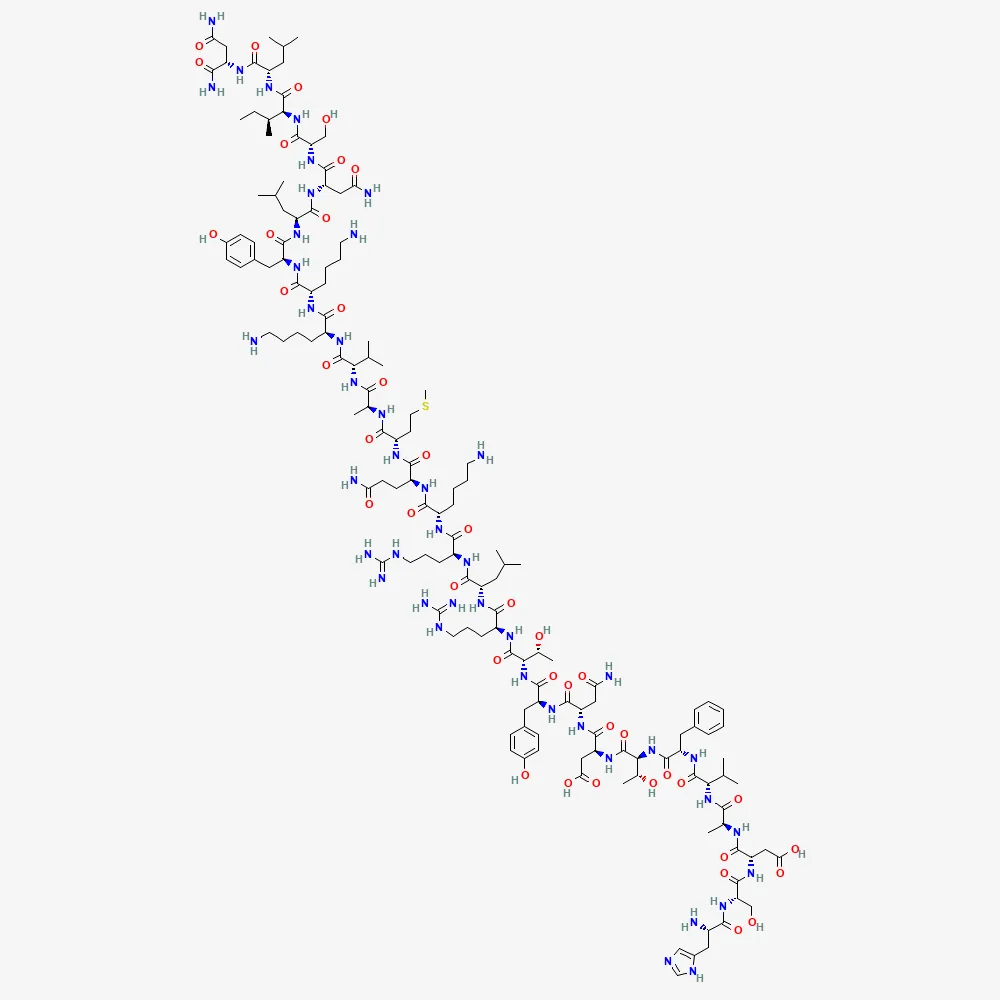
- Molecular formula
- C147H238N44O42S
- Molecular weight
- 3325.8 g/mol
- Length
- 28 amino acids
- Sequence
- HSDAVFTDNYTRLRKQMAVKKYLNSILN
- Modifications
- C-terminal amide.
- PubChem CID
- 16140438
PubChem's "Aviptadil" record (CID 16132300) is drawn as the free acid, which is wrong for VIP, so this amidated record is used instead.
Identity checked against KEGG DRUG (aviptadil, synthetic human VIP).
VIP benefits: what the research shows
Small or uncontrolled human studies. Too little to settle the question either way. VIP has a huge PubMed footprint and a real base of clinical trials, mostly of its synthetic version aviptadil in diseases unrelated to the immune-support use it is marketed for. I haven't verified those trials individually, so I report no specific findings, and I found no human trial showing benefit for the marketed use.
On 24 September 2026, a PubMed search for VIP in titles and abstracts returned 8,389 records. Of those, 111 are tagged as clinical trials.
Those numbers aren’t a verdict. Because everyone makes VIP, much of that research measures it as a marker or studies its basic biology, without giving anyone extra. The trial-tagged papers span decades, sponsors, synthetic versions and diseases, including respiratory failure, pulmonary hypertension, dry eye and sarcoidosis. Almost none test the immune support VIP is sold for today. I haven’t checked what each of the 111 found, so I don’t name individual studies or claim results.
VIP dosage
No approved product, regulator or trial has set a dose. Clinic and practitioner sources describe a nasal spray, 50 mcg per spray, alternating nostrils, starting at 4 sprays a day (200 mcg) and sometimes rising to 8 sprays a day (400 mcg) over a two-month course. That is common practice, not a tested dose. Published human studies gave VIP by intravenous infusion or inhalation, for other research questions. Full detail and the study table: VIP dosage.
VIP side effects
There is no human safety trial for the injected research-chemical product and no FDA-approved label. What is known comes from the molecule’s own pharmacology and FDA’s compounding review:
- VIP widens blood vessels, as its name says. Enough of it can be expected to cause low blood pressure, flushing and a fast heart rate. That follows from how it works; it hasn’t been measured in a trial of the consumer product.
- With no approved product, there is no FDA-reviewed dose, safety label or confirmed side-effect rate for an injected research-chemical vial.
- Category 1 on FDA’s 503A nomination list means evaluation is unfinished. FDA hasn’t found a significant safety risk, but that isn’t a safety finding either, and it doesn’t extend to retail sale.
- The size of the VIP literature reflects decades of physiology research and trials of a different synthetic version. It isn’t evidence of safety for immune support.
- I found no verified human half-life, dose or route, so I don’t publish one.
Get medical care for fainting, a racing heartbeat or severe flushing after a dose. Those are the expected signs of too much blood-vessel widening, based on how VIP works rather than on reported cases. See dosing for what the human studies used.
What FDA says about compounding it
FDA keeps a public list of bulk substances nominated for compounding under section 503A, in three categories:
- Substances still under evaluation.
- Substances FDA has flagged for significant safety concerns.
- Substances nominated without enough supporting information.
In the version updated 14 May 2026, Vasoactive Intestinal Peptide sits in Category 1 - under evaluation. FDA has not found it to raise a significant safety risk, and no final rule has added it to or excluded it from the 503A Bulks List.
Category 1 is not approval. FDA’s January 2025 interim-policy guidance says FDA does not intend to take enforcement action against a state-licensed pharmacy, federal facility or licensed physician compounding with a Category 1 substance, as long as:
- the substance comes from a registered manufacturer,
- it has a valid certificate of analysis, and
- the compounding meets every other condition of section 503A.
That is enforcement discretion for licensed compounders, not a finding that VIP is safe or effective. It says nothing about a vial a consumer buys outside that pharmacy relationship.
Is VIP legal?
VIP is not an FDA-approved drug. As of 24 September 2026, a DailyMed search for “vasoactive intestinal peptide” returns one drug label: a bulk ingredient for animal drug compounding, not a product approved for people.
It sits in Category 1 of FDA’s 503A list, which allows narrow, conditional compounding by licensed pharmacies while evaluation continues. It has no USP or NF monograph and is not part of any FDA-approved drug. FDA’s compounding safety-risk page, which lists substances with significant safety concerns, does not name VIP.
It is also sold directly to consumers as a research chemical labelled not for human use. That label is not a legal shield. FDA judges a product by its intended use and treats seller marketing as evidence of it, whatever the substance’s status on a nomination list.
Regulatory changes for this compound and others, as they happen: US peptide regulation tracker.
How VIP compares
Immune and inflammation. Doses for unapproved compounds are common practice, not trial-established. All immune and inflammation peptides →
| Compound | Main use | Evidence | Usual dose | US status |
|---|---|---|---|---|
| Thymosin alpha-1 | Licensed in a number of countries, classically for chronic hepatitis B. Sold online for general immune support. | Strong human evidence | 1.6 mg, twice weekly, subcutaneous injection, spaced 3-4 days apart | Research use only |
| LL-37 | An antimicrobial peptide naturally present in human neutrophils, skin and mucosal surfaces. Sold as a research chemical for innate-immune and antimicrobial research; FDA has not approved it for any human use. | Limited human data | 100-2000 mcg, 3-5 times weekly to once daily, subcutaneous, starting low and titrating up | Research use only |
| VIP | Sold to consumers as a research peptide marketed for immune modulation and inflammation. It is not an FDA-approved drug for any indication, and this site could not verify a completed human trial establishing benefit for that consumer use. | Limited human data | 50 mcg, 4-8 sprays a day, split across the day, alternating nostrils | Research use only |
| ARA-290 (Cibinetide) | An investigational peptide developed by Araim Pharmaceuticals for neuropathic pain and inflammation-related conditions. Never reached FDA approval for any indication; now sold to consumers as a research chemical. | Moderate human evidence | 1-8 mg, twice weekly to once daily, subcutaneous - a compounding pharmacy protocol titrates 2 mg toward 4 mg twice weekly, while the published phase 2b trial dosed 1, 4 or 8 mg once daily | Research use only |
Where to buy VIP for research
Each vendor is checked against my vendor checklist.
1.BioEdge Research Labs
5 mg vial
- No FDA warning letter found
- Names its testing lab
- Batch COAs published
Common questions
Is the VIP sold online the same thing my body makes?
It has the same amino-acid sequence. Whether a given vial contains it, at what purity and strength, is a separate question. There is no approved product to compare against, and no regulator checks that a research-chemical vial matches its label.
Has VIP been tested in people?
Yes, in many ways. Everyone already makes it, and synthetic versions such as aviptadil have been trialled for lung and blood-vessel conditions. PubMed lists thousands of VIP records and over a hundred tagged as clinical trials. I haven't verified those trials one by one, and I found no completed human trial showing benefit for the immune use VIP is marketed for.
Is VIP legal in the United States?
It is not an FDA-approved drug. DailyMed lists one VIP label, a bulk ingredient for animal drug compounding. FDA's 503A nomination list puts VIP in Category 1: under evaluation, not yet found to raise a significant safety risk, and no final decision. That lets licensed pharmacies compound with it under narrow conditions; it is not approval, and it doesn't cover research-chemical vials sold to consumers.
Is VIP safe?
That hasn't been established for the consumer product. VIP widens blood vessels, so enough of it can lower blood pressure and cause flushing or a fast heart rate. I found no human safety study of injected research-chemical VIP, and FDA hasn't evaluated one for that use.
Is VIP a good peptide?
The evidence to answer that isn't there yet. No verified human trial shows a benefit for the immune-support use it is marketed for, and no regulator checks what a research-chemical vial contains. What is known is narrower: VIP's real physiology, its Category 1 status with FDA, and its blood-pressure risk.
How long does it take for VIP peptide to work?
That hasn't been established for the consumer product. I found no human trial of how quickly it acts for immune support, and FDA has not reviewed a dose, route or timeline. I don't publish a number I can't verify.
What are the side effects of VIP?
There is no human safety data for the injected research-chemical product and no FDA label. What is known is its pharmacology: VIP widens blood vessels, so enough of it can lower blood pressure and cause flushing or a fast heart rate. FDA lists it as Category 1, still under evaluation and not cleared.
Is there a downside to taking peptides?
For a research-chemical peptide like VIP, yes. With no approved product, no regulator checks a vial's purity, dose or side-effect rate before it is sold. VIP also has its own risk of lowering blood pressure. Both apply whatever studies exist.
What is the usual VIP dose?
No approved product or regulator has set one. Clinic and practitioner sources describe a nasal spray, 50 mcg per spray, alternating nostrils, starting at 4 sprays a day (200 mcg) and sometimes rising to 8 sprays a day (400 mcg) over two months. That is common practice, not a tested dose.
References (5 sources)
Bibliographic detail is fetched from PubMed, not written by me - so a citation here cannot drift from the paper it names. Study design comes from PubMed's own tags rather than my judgement.
- 1.FDA - Bulk Drug Substances Nominated for Use in Compounding Under Section 503A of the FD&C Act (Category 1/2/3 list). Vasoactive Intestinal Peptide appears in Category 1, updated 14 May 2026.- US Food and Drug Administrationregulatory
- 2.FDA - Interim Policy on Compounding Using Bulk Drug Substances Under Section 503A of the Federal Food, Drug, and Cosmetic Act (guidance for industry, January 2025). Defines Category 1 and the enforcement-discretion conditions.- US Food and Drug Administrationregulatory
- 3.DailyMed label for AX Pharmaceutical Corp vasoactive intestinal peptide powder - a bulk ingredient for animal drug compounding, NDC 62157-475-01.- DailyMed, National Library of Medicinelabel
- 4.NCBI E-utilities esearch - "vasoactive intestinal peptide" in title/abstract, 8,389 records (queried 24 September 2026).- National Center for Biotechnology Information, US National Library of Medicinedatabase
- 5.NCBI E-utilities esearch - the same VIP search restricted to the clinical-trial publication type, 111 records (queried 24 September 2026).- National Center for Biotechnology Information, US National Library of Medicinedatabase