Thymosin Alpha-1: Benefits, Dosage, Side Effects and Legal Status
64 randomised trials, the 1.6 mg protocol, FDA's December 2024 safety review, and why approval depends on where you live.

The short version
Thymosin alpha-1 is an approved medicine in a number of countries, though not in the United States, and it has a large clinical trial record. Those trials are in sepsis, pancreatitis and hepatitis: hospital patients, not healthy adults. The newest and largest, published in the BMJ in 2025, found no clear survival benefit.
- 864 papers and 64 randomised trials: the best-evidenced compound in this market.
- The 2025 BMJ sepsis trial found no clear mortality benefit.
- Approved in some countries, not by the FDA. Where you are changes what it is.
Thymosin alpha-1 at a glance
- What it is
- Immune-modulating peptide (28 amino acids)
- Main use
- Licensed in a number of countries, classically for chronic hepatitis B. Sold online for general immune support.
- Generic name
- thymalfasin
- Brand names
- Zadaxin (approved outside the US only) Label
- Also called
- Ta1
- Molecular formula
- C129H215N33O55 (3108.3 g/mol) Structure
- Evidence
- Strong human evidence
- US status
- Research use only
- Half-life
- Not established in humans
- How it is taken
- Subcutaneous injection
- Common protocol
- 1.6 mg, twice weekly, subcutaneous injection, spaced 3-4 days apart, for 13-52 weeks (common practice, not trial-established) Dosage chart
Dosing: what the trials used.
Thymosin alpha-1 has more clinical evidence behind it than anything else I cover in the research-chemical market: 864 papers and 64 randomised controlled trials. It also has an international non-proprietary name, thymalfasin, and marketing approval in a number of countries. Two similar names belong to different products: thymulin, a 9-amino-acid thymus hormone that needs zinc to work, and Thymalin, a Russian calf-thymus extract.
It is a real medicine, and a well-tolerated one. FDA’s review of the published trials found no adverse events clearly caused by it in most studies, and an earlier sepsis trial reported fewer deaths with it. What it hasn’t had is a trial of its main online use, general immune support in healthy adults. Its newest and largest sepsis trial also did not confirm a survival benefit.
Thymosin Alpha-1 benefits: what the research shows
Thymosin alpha-1 structure
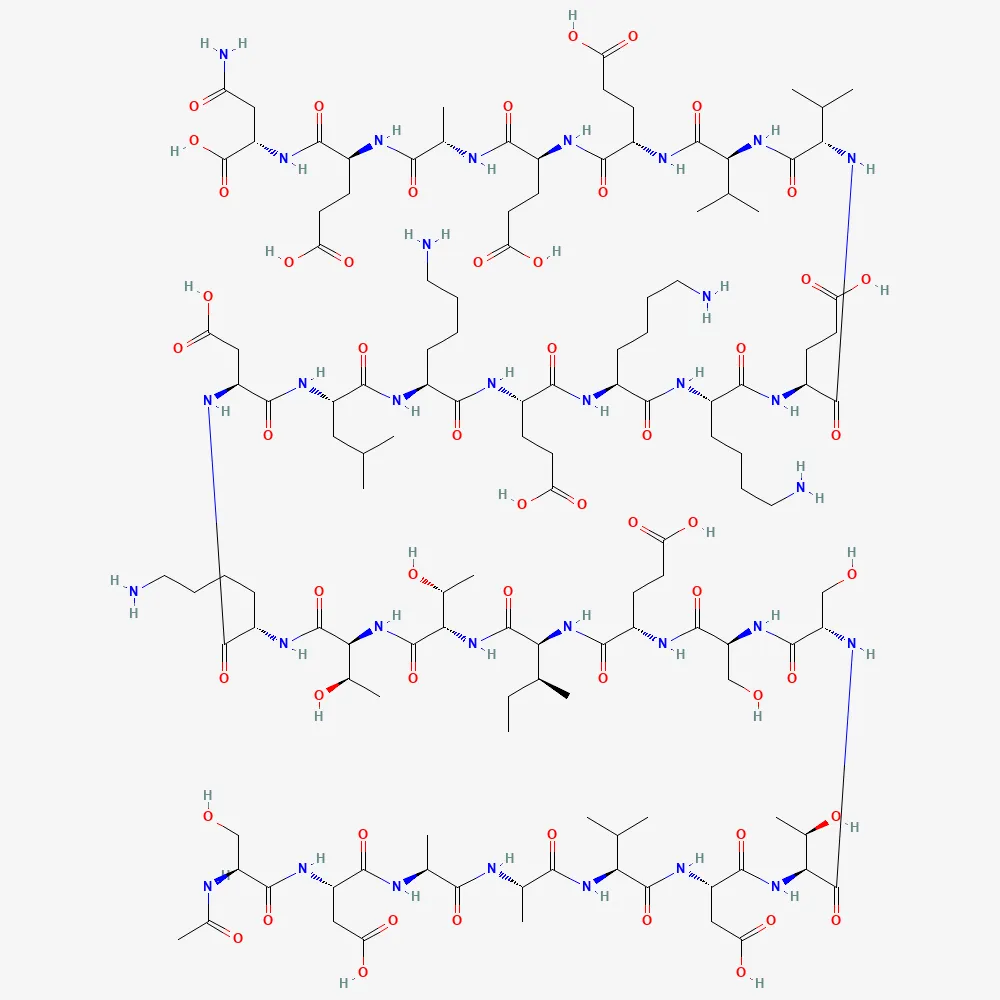
- Molecular formula
- C129H215N33O55
- Molecular weight
- 3108.3 g/mol
- Length
- 28 amino acids
- Sequence
- SDAAVDTSSEITTKDLKEKKEVVEEAEN
- Modifications
- N-terminal acetyl.
- PubChem CID
- 16130571
Identity checked against KEGG DRUG (thymalfasin).
The newest trial, and what it found
TESTS was a multicentre randomised controlled trial in adults with sepsis, published in the BMJ in 2025 Wu 2025 - Wu J, Pei F, Zhou L et al. The efficacy and safety of thymosin α1 for sepsis (TESTS): multicentre, double blinded, randomised, placebo controlled, phase 3 trial. BMJ. 2025;388:e082583., in the references below. Its main outcome was death from any cause within 28 days.
In its own words, the trial “found no clear evidence to suggest that thymosin α1 decreases 28 day all cause mortality in adults with sepsis.” No secondary or safety outcome differed significantly between the groups either.
The more encouraging result came earlier, from a severe-sepsis trial of 361 patients in six Chinese hospitals Wu 2013 - Wu J, Zhou L, Liu J et al. The efficacy of thymosin alpha 1 for severe sepsis (ETASS): a multicenter, single-blind, randomized and controlled trial. Crit Care. 2013;17(1):R8., in the references below:
- 28-day mortality was 26.0% with thymosin alpha-1 against 35.0% without it.
- That result was borderline: log-rank p = 0.049, but p = 0.062 in the unstratified analysis.
- An immune-function marker also recovered better.
That signal justified the larger trial, which did not reproduce it.
Other critical-care work includes a trial of immune enhancement in predicted severe acute necrotising pancreatitis Ke 2022 - Ke L, Zhou J, Mao W et al. Immune enhancement in patients with predicted severe acute necrotising pancreatitis: a multicentre double-blind randomised controlled trial. Intensive Care Med. 2022;48(7):899-909., in the references below. The hepatitis research, where the medicine has its classic licensed use, includes work combining it with interferon alfa You 2006 - You J, Zhuang L, Cheng HY et al. Efficacy of thymosin alpha-1 and interferon alpha in treatment of chronic viral hepatitis B: a randomized controlled study. World J Gastroenterol. 2006;12(41):6715-21., in the references below.
Does thymosin alpha-1 work for general immune support?
Look at the settings again: sepsis, necrotising pancreatitis, chronic hepatitis. These are people in hospital, often in intensive care, whose immune systems are failing under severe acute stress. Thymosin alpha-1 is being studied as a way to modulate that.
Online, it is mostly sold to healthy adults for general immune support. That use hasn’t been tested in a controlled trial yet. The hospital trials don’t carry over in either direction: a sepsis result, positive or negative, says little about how a healthy immune system responds.
How it ranks against other peptides sold for inflammation: peptides for inflammation.
Thymosin Alpha-1 dosage
The common Thymosin alpha-1 dose is 1.6 mg, twice weekly, subcutaneous injection, spaced 3-4 days apart. From a 1.6 mg vial mixed with 1 mL of bacteriostatic water, 1.6 mg is 100 units (1 mL) on a U-100 insulin syringe.
Thymosin alpha-1 has no FDA-approved US label. Community sources and foreign licensed-drug labels agree on 1.6 mg injected under the skin twice a week, 3-4 days apart, for roughly 3-12 months depending on use. That is common practice, not a dose any US regulator has set, though it matches what published trials and the foreign licensed label used. The full dosage page shows what each trial used by condition.
Thymosin Alpha-1 side effects
FDA reviewed the published clinical studies in December 2024, while considering whether to allow thymosin alpha-1 as a compounding ingredient. That review is the fullest safety picture anywhere for this molecule, and goes beyond what any single trial above reports.
Reported in studies
Across most studies, at 1 to 16 mg injected under the skin for up to 12 months, FDA found no adverse events clearly caused by thymosin alpha-1. The most common reaction was irritation, redness or discomfort at the injection site.
The trials above agree:
- The earlier severe-sepsis trial reports no serious drug-related adverse event Wu 2013 - Wu J, Zhou L, Liu J et al. The efficacy of thymosin alpha 1 for severe sepsis (ETASS): a multicenter, single-blind, randomized and controlled trial. Crit Care. 2013;17(1):R8., in the references below.
- In the 2025 BMJ trial, no safety outcome differed significantly from placebo Wu 2025 - Wu J, Pei F, Zhou L et al. The efficacy and safety of thymosin α1 for sepsis (TESTS): multicentre, double blinded, randomised, placebo controlled, phase 3 trial. BMJ. 2025;388:e082583., in the references below.
- The hepatitis B trial reports no side effects at all in the thymosin alpha-1 group, unlike its interferon comparator You 2006 - You J, Zhuang L, Cheng HY et al. Efficacy of thymosin alpha-1 and interferon alpha in treatment of chronic viral hepatitis B: a randomized controlled study. World J Gastroenterol. 2006;12(41):6715-21., in the references below.
Rare but serious
FDA’s review also found rarer, more serious reports in the published studies:
- liver-enzyme flares in hepatitis B patients
- thyroid-hormone abnormalities in hepatitis C patients
- nipple pain
- one fatal immune hemolytic anemia with engraftment failure in a stem-cell transplant recipient
FDA flagged that thymosin alpha-1 could worsen graft-versus-host disease or cause engraftment failure in stem-cell transplant patients. It also said there is too little data to judge its safety as a vaccine adjuvant.
Product quality is a separate concern. Thymosin alpha-1 is a 28-amino-acid peptide given by injection, and FDA’s chemistry review calls the compounded form “not well-characterized”. There is no public data on impurities or aggregation in the product sold, and FDA says both could raise the risk of an immune reaction to the peptide itself.
For the injection itself, injection-site reactions explains what is ordinary and what needs attention.
Is thymosin alpha-1 legal?
US legal status - Research use only
Thymosin alpha-1 is not FDA-approved. It holds marketing approval in a number of other countries, where it is a licensed prescription medicine rather than a research chemical. I am verifying the specific national approvals against primary regulators before naming them here.
This compound shows most clearly why I record legal status country by country. “Thymosin alpha-1 is an approved medicine” and “thymosin alpha-1 is not approved” are both true, and which one applies to you depends on where you live. Sellers tend to quote only the first.
Regulatory changes for this compound and others, as they happen: US peptide regulation tracker.
How Thymosin alpha-1 compares
Immune and inflammation. Doses for unapproved compounds are common practice, not trial-established. All immune and inflammation peptides →
| Compound | Main use | Evidence | Usual dose | US status |
|---|---|---|---|---|
| Thymosin alpha-1 | Licensed in a number of countries, classically for chronic hepatitis B. Sold online for general immune support. | Strong human evidence | 1.6 mg, twice weekly, subcutaneous injection, spaced 3-4 days apart | Research use only |
| LL-37 | An antimicrobial peptide naturally present in human neutrophils, skin and mucosal surfaces. Sold as a research chemical for innate-immune and antimicrobial research; FDA has not approved it for any human use. | Limited human data | 100-2000 mcg, 3-5 times weekly to once daily, subcutaneous, starting low and titrating up | Research use only |
| VIP | Sold to consumers as a research peptide marketed for immune modulation and inflammation. It is not an FDA-approved drug for any indication, and this site could not verify a completed human trial establishing benefit for that consumer use. | Limited human data | 50 mcg, 4-8 sprays a day, split across the day, alternating nostrils | Research use only |
| ARA-290 (Cibinetide) | An investigational peptide developed by Araim Pharmaceuticals for neuropathic pain and inflammation-related conditions. Never reached FDA approval for any indication; now sold to consumers as a research chemical. | Moderate human evidence | 1-8 mg, twice weekly to once daily, subcutaneous - a compounding pharmacy protocol titrates 2 mg toward 4 mg twice weekly, while the published phase 2b trial dosed 1, 4 or 8 mg once daily | Research use only |
Where to buy Thymosin alpha-1 for research
Each vendor is checked against my vendor checklist.
1.Spartan PeptidesFeatured
5 mg vial
- No FDA warning letter found
- Names its testing lab
2.BioEdge Research Labs
10 mg vial
- No FDA warning letter found
- Names its testing lab
- Batch COAs published
Common questions
What is thymosin alpha-1?
A peptide that modulates immune function, with the international name thymalfasin. Unlike most compounds I cover, it is a licensed medicine in a number of countries. Its classic use is chronic hepatitis B, and it has been studied extensively in critical care.
Is thymosin alpha-1 FDA-approved?
No. It is approved in a number of other countries, which is why you will see it called an approved medicine without qualification. Both statements are true, and which one applies to you depends on where you are. That is why I record legal status per country rather than as a single fact.
What is the usual thymosin alpha-1 dose?
Community sources and foreign licensed-drug labels agree on 1.6 mg injected under the skin twice a week, 3-4 days apart, for roughly 3-12 months depending on use. That is common practice, not a dose any US regulator has set. The thymosin alpha-1 dosage page covers what published trials used.
Does thymosin alpha-1 work?
For general immune support in healthy people, the marketed use, it hasn't been tested in a controlled trial yet. In sepsis the picture is mixed. An earlier trial of 361 patients reported fewer deaths at 28 days (26% against 35%, a borderline result), but the larger 2025 BMJ trial found no clear evidence that it reduces 28-day mortality.
Who were the trials actually run in?
Patients with sepsis, predicted severe acute necrotising pancreatitis or chronic hepatitis: seriously ill people, in hospital, under supervision. Results in those groups say little either way about a healthy adult taking it for general immune support.
Is buying thymosin alpha-1 online the same product?
No. The licensed version sold in some countries is made to pharmaceutical standards. Research-chemical vendors sell the same molecule name with none of that assurance, and importing an unapproved medicine has its own legal consequences depending on where you live.
What are the side effects of thymosin alpha-1?
FDA's December 2024 review of the published studies found no adverse events clearly caused by thymosin alpha-1 in most of them; injection-site irritation and redness were the most common reaction. It also found rarer, serious reports: liver-enzyme flares in hepatitis B, thyroid abnormalities in hepatitis C, and a fatal immune reaction in a stem-cell transplant recipient. FDA flagged that it could worsen graft-versus-host disease in transplant patients.
What is the brand name of thymalfasin?
Thymalfasin has no brand on the US market. Outside the US it is sold as Zadaxin (SciClone Pharmaceuticals).
What is the generic name for Zadaxin?
The generic name for Zadaxin is thymalfasin. Zadaxin is SciClone Pharmaceuticals's brand, approved for depending on the country, chronic hepatitis B and C, and use as a vaccine or chemotherapy adjuvant. It is not approved in the US.
References (6 sources)
Bibliographic detail is fetched from PubMed, not written by me - so a citation here cannot drift from the paper it names. Study design comes from PubMed's own tags rather than my judgement.
- 1.Wu J, Pei F, Zhou L et al. The efficacy and safety of thymosin α1 for sepsis (TESTS): multicentre, double blinded, randomised, placebo controlled, phase 3 trial. BMJ. 2025;388:e082583.Randomised trialPMID 39814420full text
- 2.Wu J, Zhou L, Liu J et al. The efficacy of thymosin alpha 1 for severe sepsis (ETASS): a multicenter, single-blind, randomized and controlled trial. Crit Care. 2013;17(1):R8.Randomised trialPMID 23327199full text
- 3.Ke L, Zhou J, Mao W et al. Immune enhancement in patients with predicted severe acute necrotising pancreatitis: a multicentre double-blind randomised controlled trial. Intensive Care Med. 2022;48(7):899-909.Randomised trialPMID 35713670full text
- 4.You J, Zhuang L, Cheng HY et al. Efficacy of thymosin alpha-1 and interferon alpha in treatment of chronic viral hepatitis B: a randomized controlled study. World J Gastroenterol. 2006;12(41):6715-21.Randomised trialPMID 17075991full text
- 5.FDA Pharmacy Compounding Advisory Committee briefing slides, 'Thymosin Alpha-1 (Ta1) Related Bulk Drug Substances,' 4 December 2024. FDA's own chemistry, nonclinical and clinical-safety review of thymosin alpha-1 as a proposed 503A compounding substance, including its overall conclusion on clinical safety and immunogenicity concerns.- US Food and Drug Administrationregulatory
- 6.Thymosin Alpha-1 (Ta1) Related Bulk Drug Substances - FDA briefing slides, 4 December 2024- U.S. Food and Drug Administration, Pharmacy Compounding Advisory Committeelabel