Vilon: What It Is, Dosage and What the Evidence Shows
Vilon is a Khavinson-group dipeptide sold for immune support. Real cell-culture studies exist under its own name - still no human trial.

The short version
Vilon is a synthetic two-amino-acid peptide (Lys-Glu) from the Khavinson short-peptide bioregulator programme, sold as a thymus and immune-system bioregulator. Unlike some others in its family, it has real cell-culture studies under its own name, in thymus and immune cells. No human trial of any kind has been published.
- Vilon has real, checkable cell-culture studies under its own name, in thymus and immune cells, matching what it is marketed for.
- No published human trial exists at any dose, for any use.
- Dosing guides commonly describe roughly 10-20 mg by mouth once a day, in 20-30 day courses. That is not trial-established.
- Sources on an injectable form disagree by roughly a thousandfold on dose, so this page does not report one.
Vilon at a glance
- What it is
- Synthetic dipeptide (Lys-Glu), one of the Khavinson-group short peptide bioregulators
- Main use
- Marketed as a thymus and immune-system bioregulator, sold for immune support and healthy ageing.
- Also called
- KE peptide, Lys-Glu dipeptide
- Molecular formula
- C11H21N3O5 (275.30 g/mol) Structure
- Evidence
- Animal / lab only
- US status
- Research use only
- Half-life
- Not established in humans
- How it is taken
- By mouth
- Common protocol
- 10-20 mg, once daily by mouth, for 2.9-4.3 weeks (common practice, not trial-established)
Vilon is one of the Khavinson-group peptide bioregulators, sold as a thymus and immune-system bioregulator. Of the three I covered together (Vilon, Cartalax and Testagen), Vilon’s evidence matches its marketing most closely. Even so, that evidence is cell culture, not a human trial.
What is Vilon?
Vilon is a synthetic dipeptide of two amino acids, Lys-Glu (lysine-glutamic acid). It comes from the St Petersburg peptide-bioregulator programme described on the bioregulator hub page. It was first described from thymus tissue and is marketed for immune support and healthy ageing.
Studied in cells or animals. No controlled trials in humans. Vilon has real, checkable evidence under its own name, unlike Cartalax or Testagen. One study names it among five Khavinson-group peptides tested on human THP-1 monocyte/macrophage cells. A second, about 'Vilon and its analogue', tested dipeptides in cultured human and animal thymus cells. Both are cell-culture experiments, not animal or human trials, and both come from the same small Russian research tradition.
Vilon structure
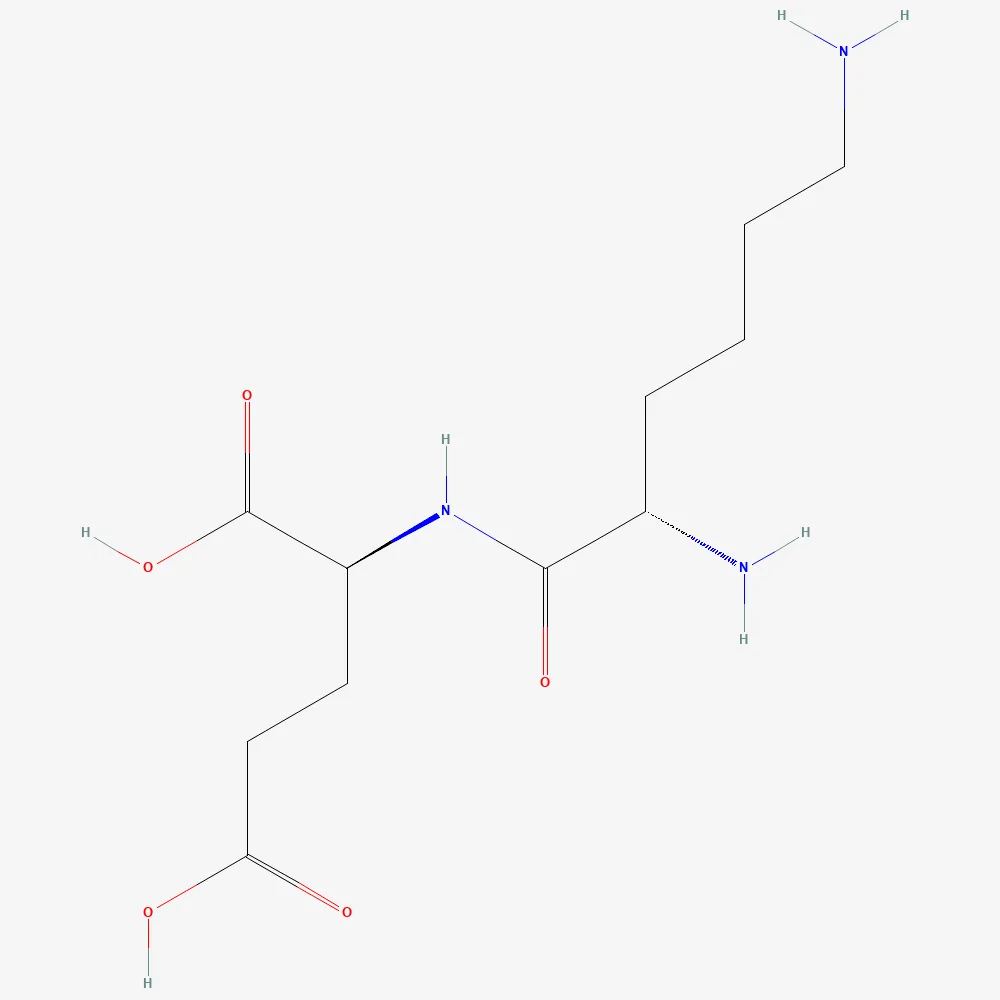
- Molecular formula
- C11H21N3O5
- Molecular weight
- 275.30 g/mol
- Length
- 2 amino acids
- Sequence
- KE
- Modifications
- L-Lys-L-Glu; free N- and C-termini.
- PubChem CID
- 7010502
Identity checked against FDA Global Substance Registration System (UNII H34V7IM5ML).
How Vilon works
The wider bioregulator theory proposes that short peptides like this one act on genes involved in how immune cells mature (differentiation); the bioregulator hub page covers it. For Vilon this is more than theory: the cell-culture studies below test exactly that kind of outcome, in thymus and monocyte cells.
Vilon benefits: what the research shows
Two cell-culture studies name Vilon:
- 2022, human immune cells. Five Khavinson-group peptides (Epitalon, Vilon, Thymogen, Thymalin and Chonluten) were tested on human THP-1 monocyte/macrophage cells. All five changed growth signalling, increasing tyrosine phosphorylation of MAP kinases. Chonluten alone also suppressed TNF production after the cells were exposed to bacterial endotoxin Avolio 2022 - Avolio F, Martinotti S, Khavinson VK et al. Peptides Regulating Proliferative Activity and Inflammatory Pathways in the Monocyte/Macrophage THP-1 Cell Line. Int J Mol Sci. 2022;23(7)., in the references below.
- 2013, thymus cells. A paper on “Vilon and its analogue” reports that two dipeptides increased the T-cell maturation marker CD5 in cultured human and animal thymus cells. The second compound produced a stronger shift toward mature helper and cytotoxic T cells Sevostianova 2013 - Sevostianova NN, Linkova NS, Polyakova VO et al. Immunomodulating effects of Vilon and its analogue in the culture of human and animal thymus cells. Bull Exp Biol Med. 2013;154(4):562-5., in the references below.
Vilon dosage
Dosing guides most often describe an oral course of roughly 10-20 mg once a day, for 20-30 days, on an empty stomach and repeated every 3-6 months. That is common practice, not a dose any trial or regulator has set.
Sources describing an injectable (subcutaneous) version disagree by roughly a thousandfold: the figures I found ran from about 10 mcg to 10 mg a day for the same compound. So this page gives no dose for that route.
Common protocol
What is commonly used, not a dose established in trials. No regulator has set a dose for Vilon.
- Dose
- 10-20 mg
- How often
- once daily by mouth
- Route
- By mouth
- Cycle length
- 2.9-4.3 weeks
- Break between cycles
- 13-26 weeks
- Timing
- On an empty stomach; both sources describing this route say to take it before eating.
Sources describing an injectable (subcutaneous) form of Vilon exist, but the doses they state for that route range from about 10 mcg to 10 mg per day - a roughly thousandfold spread with no two sites agreeing - so this record reports only the oral capsule course, where two sources agree reasonably well.
What is not established
- No published human trial exists for Vilon, at any dose, for any use.
- The cell studies don’t give a human dose. They used a lab concentration in a dish, not a milligram amount for a person.
- No dose has been shown safe or effective for any use, by any regulator.
- Sources disagree sharply on the injectable dose, by roughly a thousandfold, so only the oral course, where two sources broadly agree, is given above.
Vilon side effects
No human safety study exists for Vilon at any dose, so there is no verified side-effect rate.
It is sold as a research chemical or unregulated capsule or vial product, so no regulator checks that a batch matches its label for contents, purity or even the peptide’s identity. Because an injectable form is also sold, see peptide injection-site reactions for the general risks of injecting under the skin, which are not specific to this compound.
Is Vilon legal?
US legal status - Research use only
Sold for laboratory research use only. Not approved by the FDA for human use, and cannot be lawfully marketed as a supplement or a medicine. Products sold this way are not made to pharmaceutical quality standards, and their contents are not verified by anyone.
Vilon is not approved for human use by the FDA or any regulator I can verify. It is sold internationally as a research chemical or an unregulated capsule or vial product, outside any approved drug supply chain.
Regulatory changes for this compound and others, as they happen: US peptide regulation tracker.
Related
- Peptide bioregulators: the Khavinson peptides
- Epitalon
- Pinealon
- Thymulin, Thymalin and Thymagen
- Research peptides and the law
How Vilon compares
Bioregulators. Doses for unapproved compounds are common practice, not trial-established. All bioregulators peptides →
| Compound | Main use | Evidence | Usual dose | US status |
|---|---|---|---|---|
| Vilon | Marketed as a thymus and immune-system bioregulator, sold for immune support and healthy ageing. | Animal / lab only | 10-20 mg, once daily by mouth | Research use only |
| Epitalon | Sold for longevity and anti-aging on the basis of telomere research. | Animal / lab only | 5-10 mg, once nightly, every night, for the length of the cycle | Research use only |
| Pinealon | Sold for cognition, focus and healthy aging. | Limited human data | 1-2 mg, once daily, morning preferred; some protocols run 5 days a week rather than every day | Research use only |
| Cartalax | Marketed for cartilage and joint support, sold as a "cartilage bioregulator" for age-related joint wear. | Animal / lab only | 200 mcg, once daily | Research use only |
| Testagen | Marketed for testosterone and reproductive-system support, sold as a "testes bioregulator." | Animal / lab only | 10-20 mg, once daily by mouth | Research use only |
| Vesugen | Marketed as a vascular-tissue bioregulator for cardiovascular and blood-vessel aging; more recent papers from the same research group also study it as a candidate for age-related cognitive decline. | Limited human data | 500-5000 mcg, once daily, subcutaneous, commonly started low and titrated upward over the first 1-3 weeks | Research use only |
| Cardiogen | Marketed as a heart-tissue bioregulator for cardiovascular aging, from the Khavinson organ-specific peptide programme. | Animal / lab only | 200-2000 mcg, once daily, subcutaneous, most commonly cited around 1 mg/day | Research use only |
| Prostamax | Marketed as a prostate-tissue bioregulator for age-related prostate change, from the Khavinson organ-specific peptide programme. | Animal / lab only | 750-2000 mcg, once daily, subcutaneous, often started lower and increased after 1-4 weeks | Research use only |
Where to buy Vilon for research
Each vendor is checked against my vendor checklist.
1.BioEdge Research Labs
20 mg vial
- No FDA warning letter found
- Names its testing lab
- Batch COAs published
Common questions
Is there any published research on Vilon specifically?
Yes, unlike some others in this family. One study names Vilon among five Khavinson-group peptides tested on human immune cells. A second, about "Vilon and its analogue", tested it in cultured human and animal thymus cells. Both are cell-culture experiments, not animal or human trials.
What is the usual Vilon dose?
Dosing guides most often describe roughly 10-20 mg by mouth once a day for 20-30 days, repeated every 3-6 months. That is common practice, not a dose any trial or regulator has set. Sources on an injectable version disagree by roughly a thousandfold, so this page gives no injectable figure.
What are the side effects of Vilon?
No human safety study exists at any dose, so there is no verified side-effect rate. See the side effects section for what is and isn't known.
References (2 sources)
Bibliographic detail is fetched from PubMed, not written by me - so a citation here cannot drift from the paper it names. Study design comes from PubMed's own tags rather than my judgement.
- 1.Avolio F, Martinotti S, Khavinson VK et al. Peptides Regulating Proliferative Activity and Inflammatory Pathways in the Monocyte/Macrophage THP-1 Cell Line. Int J Mol Sci. 2022;23(7).StudyPMID 35408963full text
- 2.Sevostianova NN, Linkova NS, Polyakova VO et al. Immunomodulating effects of Vilon and its analogue in the culture of human and animal thymus cells. Bull Exp Biol Med. 2013;154(4):562-5.StudyPMID 23486604