Chonluten: Benefits, Dosage and Side Effects
Chonluten: the Khavinson bronchial-tissue tripeptide with exactly one published study, no animal data, and no agreed dosing protocol.

The short version
Chonluten is a tripeptide from the Russian Khavinson peptide-bioregulator programme, marketed for bronchial and lung support. PubMed holds exactly one study of it: a lab experiment on a human cell line. No animal study or clinical trial exists, and the dosing pages online don't agree with each other.
- Exactly one published study exists, and it is a lab experiment on a human cell line.
- No animal study and no clinical or randomised trial of any kind has been published.
- Dosing pages online disagree by an order of magnitude, so this page states no common protocol.
Chonluten at a glance
- What it is
- Tripeptide bioregulator (Glu-Asp-Gly), described in the literature as derived from bronchial epithelial cells.
- Main use
- Marketed for bronchial and respiratory support alongside Bronchogen, within the Khavinson peptide-bioregulator line.
- Also called
- Chonluten tripeptide
- Molecular formula
- C11H17N3O8 (319.27 g/mol) Structure
- Evidence
- Animal / lab only
- US status
- Research use only
- Half-life
- Not established in humans
Dosing: why this page states no common protocol.
This is one of the shortest evidence records on the site, because there is very little evidence to report.
What is Chonluten?
Chonluten is a tripeptide from the same Russian Khavinson peptide-bioregulator programme as Epitalon and Bronchogen. The published literature describes it as derived from bronchial lining (epithelial) cells. It is marketed for bronchial and respiratory support, often alongside Bronchogen.
A 2022 paper co-authored by the programme’s founder gives its sequence as Glu-Asp-Gly (EDG) Avolio 2022 - Avolio F, Martinotti S, Khavinson VK et al. Peptides Regulating Proliferative Activity and Inflammatory Pathways in the Monocyte/Macrophage THP-1 Cell Line. Int J Mol Sci. 2022;23(7)., in the references below. It is shown in the structure section.
Chonluten structure
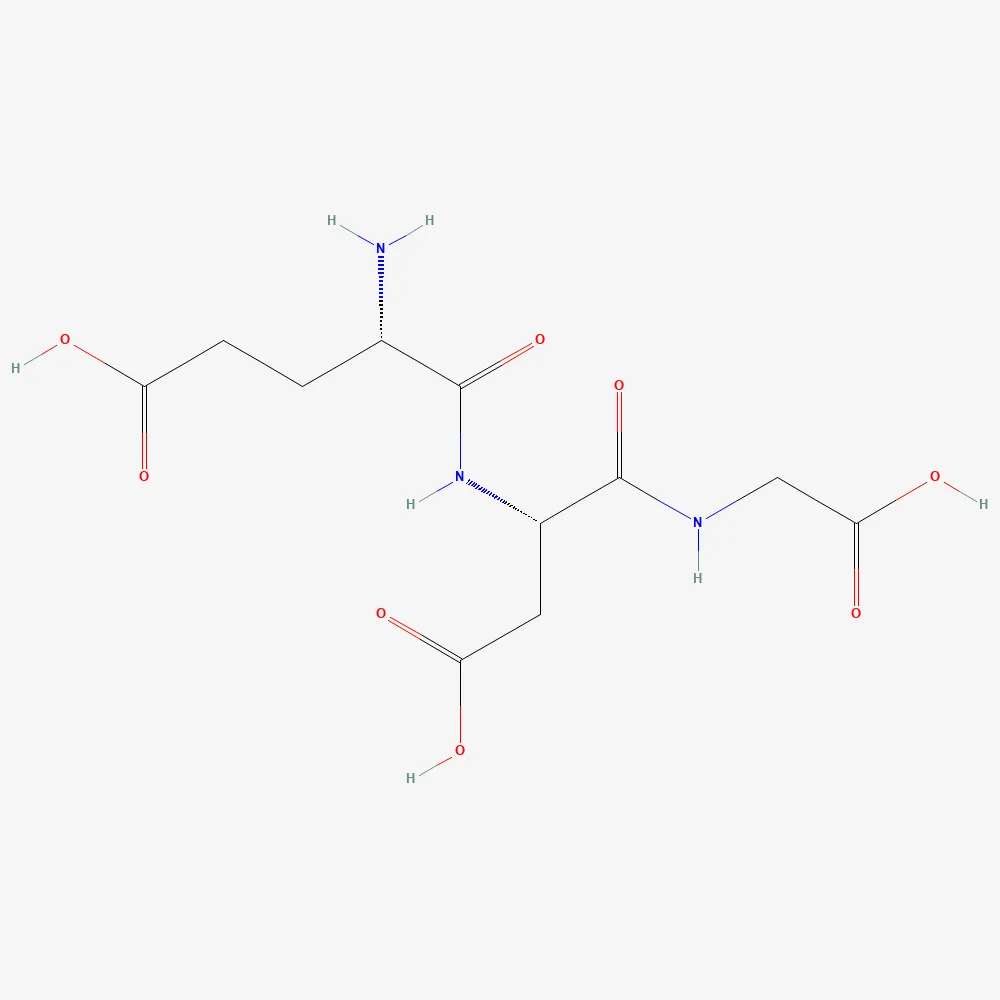
- Molecular formula
- C11H17N3O8
- Molecular weight
- 319.27 g/mol
- Length
- 3 amino acids
- Sequence
- EDG
- PubChem CID
- 194641
PubChem does not list the name Chonluten on this record (it lists the lab code T-34); the sequence comes from the developers' 2022 paper.
Identity checked against International Journal of Molecular Sciences (Avolio et al. 2022, PMID 35408963; Khavinson co-author).
Chonluten benefits: what the research shows
The one study tested Chonluten, alongside Epitalon, Vilon, Thymogen and Thymalin, on a human monocyte cell line Avolio 2022 - Avolio F, Martinotti S, Khavinson VK et al. Peptides Regulating Proliferative Activity and Inflammatory Pathways in the Monocyte/Macrophage THP-1 Cell Line. Int J Mol Sci. 2022;23(7)., in the references below:
- Chonluten alone reduced TNF production by monocytes exposed to bacterial lipopolysaccharide (LPS).
- All five peptides together reduced LPS-triggered TNF and IL-6 release.
- They also reduced the cells’ sticking (adhesion) to activated blood-vessel lining cells.
Chonluten dosage
No published study, animal or human, gives a dose for Chonluten, so there is no trial-based number to report.
I also checked the clinic and vendor dosing pages in circulation. For Bronchogen or Pinealon, several independent pages roughly agree. For Chonluten they don’t:
- one gives roughly 1-2 mg by injection for about 10 days
- a second gives a completely different 250-1500 mcg titration over 8-16 weeks
- a third covers oral capsules only
- a fourth contradicts itself about whether its own protocol is injected
That isn’t a shared common practice. It reads as each page inventing its own numbers.
Common protocol
No consistent protocol in circulation. No two real sources converge on a usable protocol. Four dosing pages were fetched and read: one gives 1-2mg SC daily for about 10 days; a second gives an 8-16 week titration schedule from 250mcg up to 1500mcg SC daily - a completely different order of magnitude and a course roughly ten times longer; a third covers oral capsules only, 1-2 capsules daily for 30 days or 2-4 capsules daily for 30-60 days, with no way to cross-check against the injectable figures; and a fourth contradicts itself within the same page, describing the injectable route as both subcutaneous and sublingual. Nothing here is a convergent, sourced common practice this page can responsibly state.
Chonluten side effects
There is no human safety data for Chonluten. With no animal study or clinical trial published, there is no adverse-reaction rate, no FDA label and no controlled tolerability study.
Reported in studies
The one published study has no adverse-event data, because it measured inflammatory markers in a cell line, not safety in a living organism Avolio 2022 - Avolio F, Martinotti S, Khavinson VK et al. Peptides Regulating Proliferative Activity and Inflammatory Pathways in the Monocyte/Macrophage THP-1 Cell Line. Int J Mol Sci. 2022;23(7)., in the references below.
Reported by users
Injection-site irritation is the effect most often described for Chonluten. That comes from sellers’ own pages, not an independent survey or case report, so I note it without treating it as evidence.
Because it is sold as a research chemical, no regulator checks that a vial’s purity and contents match its label. That is a separate risk on top of the missing safety data, not a side effect of the peptide itself.
For the injection itself, injection-site reactions explains what is ordinary and what needs attention.
Is Chonluten legal?
US legal status - Research use only
Sold for laboratory research use only. Not approved by the FDA for human use, and cannot be lawfully marketed as a supplement or a medicine. Products sold this way are not made to pharmaceutical quality standards, and their contents are not verified by anyone.
Chonluten is not approved for human use anywhere. It is sold as a research chemical, so no regulator checks that a vial matches its label.
Regulatory changes for this compound and others, as they happen: US peptide regulation tracker.
Related
How Chonluten compares
Bioregulators. Doses for unapproved compounds are common practice, not trial-established. All bioregulators peptides →
| Compound | Main use | Evidence | Usual dose | US status |
|---|---|---|---|---|
| Chonluten | Marketed for bronchial and respiratory support alongside Bronchogen, within the Khavinson peptide-bioregulator line. | Animal / lab only | No consistent protocol | Research use only |
| Epitalon | Sold for longevity and anti-aging on the basis of telomere research. | Animal / lab only | 5-10 mg, once nightly, every night, for the length of the cycle | Research use only |
| Pinealon | Sold for cognition, focus and healthy aging. | Limited human data | 1-2 mg, once daily, morning preferred; some protocols run 5 days a week rather than every day | Research use only |
| Cartalax | Marketed for cartilage and joint support, sold as a "cartilage bioregulator" for age-related joint wear. | Animal / lab only | 200 mcg, once daily | Research use only |
| Testagen | Marketed for testosterone and reproductive-system support, sold as a "testes bioregulator." | Animal / lab only | 10-20 mg, once daily by mouth | Research use only |
| Vilon | Marketed as a thymus and immune-system bioregulator, sold for immune support and healthy ageing. | Animal / lab only | 10-20 mg, once daily by mouth | Research use only |
| Vesugen | Marketed as a vascular-tissue bioregulator for cardiovascular and blood-vessel aging; more recent papers from the same research group also study it as a candidate for age-related cognitive decline. | Limited human data | 500-5000 mcg, once daily, subcutaneous, commonly started low and titrated upward over the first 1-3 weeks | Research use only |
| Cardiogen | Marketed as a heart-tissue bioregulator for cardiovascular aging, from the Khavinson organ-specific peptide programme. | Animal / lab only | 200-2000 mcg, once daily, subcutaneous, most commonly cited around 1 mg/day | Research use only |
Where to buy Chonluten for research
Each vendor is checked against my vendor checklist.
1.BioEdge Research Labs
20 mg vial
- No FDA warning letter found
- Names its testing lab
- Batch COAs published
Common questions
Is there any human evidence for Chonluten?
One study: a 2022 lab experiment on a human monocyte cell line, testing Chonluten with four other Khavinson peptides. It found less inflammatory cytokine release and less cell adhesion in the dish. That is not a result from dosing a living person.
What is the usual Chonluten dose?
No trial establishes one, and the dosing pages online disagree too much to state a common protocol. The dosage section below explains why.
What are the side effects of Chonluten?
There is no human safety data, because no human trial has been published. There is no adverse-reaction rate, no FDA label and no controlled tolerability study.
References (1 sources)
Bibliographic detail is fetched from PubMed, not written by me - so a citation here cannot drift from the paper it names. Study design comes from PubMed's own tags rather than my judgement.